

Ian Hopkinson
Author's posts
Jun 19 2026
Book review: Alchemy by Philip Ball
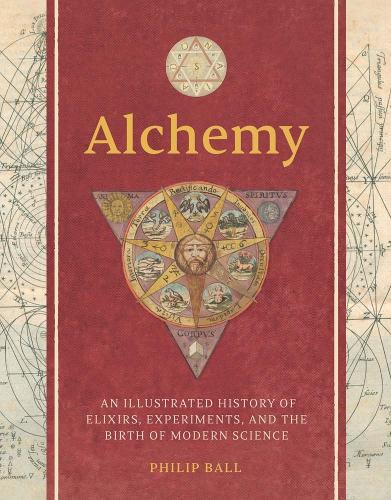
I seem to have been on a run of illustrated books, perhaps as a result of regular visits to a local bookshop, illustrated books have more shelf appeal! This review is of Alchemy by Philip Ball with the lengthy subtitle; An Illustrated History of Elixirs, Experiments, and the birth of Modern Science. My copy is a larger format hardback book: a little shorter than A4 but about as wide. The illustrations are well-reproduced and mixed with the text although each chapter finishes with a series of illustrations with captions.
The book is divided into nine thematic chapters which are very roughly in chronological order. They cover the origins of alchemy, key interests of alchemists, laboratory equipment and the transition to modern chemistry with a final chapter on alchemy in culture.
Ancient Egyptians were key to early alchemy, making sophisticated glassware by the mid to late 15th century BC – the earliest glass dates to 2500BC. They were also making a wide range of chemical preparations including dyes, glazes and cosmetics.
The earliest Egyptian texts regarding alchemy date to the 3rd century AD, they were subsequently translated and greatly expanded by Islamic scholars towards the end of the first millennium from there they entered Europe during the Renaissance. Alchemists were also active in India and China from around at least the beginning of the Current Era.
Alchemy seems to have been prone to poorly attributed texts. For example, many texts are attributed to Jabir ibn Hayyan who probably lived in the 9th century – the broader corpus which he can’t have written is referred to as by “pseudo-Geber”. I wonder whether this issue is more widespread in early writing – a result of the pre-print mechanisms of publishing – rather than just an issue with alchemy.
In common with other scientific and artistic enterprises, alchemists often relied on royal patronage – Holy Roman Emperor Rudolf II (1552-1612) was a keen patron of alchemy in Prague.
Alchemy led to the birth of the laboratory as a separate space filled with a range of equipment which looks familiar even now. A variety of heat sources were central to this, alchemists were referred to as “puffers” as a result of their use of bellows to drive furnaces. The crucible, found in the lab today, comes from the Latin for “little place of torment”! Crucibles from the Hesse region of Germany were particularly sought after – it seems the local clay was very conducive to making crucibles. The bain-marie was invented as an alchemical tool by a, possibly mythical, female alchemist. Distillation, an important process even now, goes back to the 2nd millennium BC.
Converting other metals into gold, transmutation, was a primary concern for Western alchemists for pretty much the entire period that alchemists existed. The earliest bronze, made around 3500BC, was made by heating mixtures of ores not the pure metal, pure tin – one of the components of bronze, was not isolated until 1800BC. Our modern idea of elements dates is fairly recent, dating back to the 17th century. In the beginning the different elemental metals were not easily distinguishable from mixtures or even other elemental metals. Metal workers knew that rocks could be transformed to metals, and that metals could themselves could be transformed.
So why not transmutation? Even Robert Boyle, writing in the 17th century, was not convinced that transmutation was impossible.
Once elements were “discovered” it was realised that converting one element into another element (gold) is impossible. There is a proviso here though, 20th century atomic physics shows that elements can be transformed into other elements by nuclear processes but not by the chemical processes to which alchemists had access. As the physicist Ernest Rutherford said to his colleague Frederick Soddy “For Mike’s sake, Soddy, don’t call it transmutation. They’ll have our heads off as alchemists!”.
Transmutation was not the only subject of alchemical study, as well as broader chemical studies, in the East the search for elixirs to extend life was of more concern. Presumably more esoteric alchemical work sat alongside what we would now consider to be industrial chemistry.
In the West Paracelsus was creating a new sort of medicine based on chemistry rather than the four humours of ancient Greece. Philip Ball has written a biography of Paracelsus which I reviewed here. There’s a parallel here with the alchemists starting to break away from the classical elements (earth, water, fire, air, and aether) – in the same way that Copernicus and Galileo were breaking away from the Ptolemaic model of the universe.
It’s worth noting that the ability to make gold from other metals was potentially disastrous from an economic point of view – attempting to make gold was banned by both the Pope and Henry IV in the 14th and 15th centuries. The search for the philosopher’s stone (a material to carry out transmutation) came to be seen outside alchemy as both a fraudulent activity for some alchemists and a road to ruin for others, it was a byword for obsessive pursuits. Esotericism was long a feature of alchemy, the idea of keeping knowledge only for select adepts.
Throughout this review I have struggled as to when to write “alchemy” and when “chemistry”. Robert Boyle’s 1661, The Skeptical Chymist is often cited as a polemic against alchemy but it was more an effort to identify what was good and what was bad in alchemy to build what was to become chemistry. Some 20th century historians of science were dismissive of alchemy, seeing it as mysticism, hopeless causes and fraud perhaps influenced by the alchemy revival in the 19th century, which focussed on the spiritual side of alchemy. The alchemy Ball describes is one of chemicals, processes and a system of the world which transformed into modern chemistry through the 17th and 18th century with the loss of its mystical, and fraudulent elements.
Alchemy has always been referenced in wider culture, we still talk about alchemy now to reference processes which are almost magical in their effectiveness. I enjoyed this book, it has prompted me to seek out more books about alchemy – Ball includes a useful list of further reading.
Jun 01 2026
Book review: Horses by Ludovic Orlando
My next review is of Horses: A 4,000-year genetic journey across the world by Ludovic Orlando (translated by Teresa Lavender Fagan).
It is a product of the work that the author did as the leader of a team of scientists and archaeologists on the evolution of the domesticated horse. The core of this work was to sample horse remains over a wide span of time for DNA to identify where horses were domesticated and how they evolved over time. The book is scattered with vignettes of the scientists and archaeologists with whom he collaborated.
There are eleven thematic chapters, covering the origin of the domesticated horse, the origins of horses in different parts of the world, mules, and horses in different periods of time.
It is worth remembering that a little over 100 years ago horses were economically critical, an outbreak of equine flu had a huge impact on the US economy in 1872/3 since much transport of goods and people was by horse. Indeed the severity of the Boston fire is attributed to the inability to move water pumps because of a lack of horses. Globally the number of horses has declined to around 60 million since the end of the 19th century when it was probably around 75 million but against the background of a human population that has tripled in that time.
The genetic work shows that the origin of the domestic horse is relatively recent – dating to 4200 years ago in the Volga-Don valley bordering the Caspian Sea north of the Caucasus – very close to the part of Ukraine that Russia has recently invaded. All modern horses are descended from this domestication with the exception of the wild Przewalski’s horse which are descended from an abortive earlier domestication in the Botai culture of Northern Kazakhstan. Here the horse had been domesticated a little earlier , approximately 5000 years ago, as evidenced by archaeological remains, but no trace of these horses is found in modern horses (aside from the Przewalski’s horse). Prior to the genetic work the location of the domestication of the horse was uncertain, options covered central Europe and Asia, as well as the Iberian peninsula. It was believed that Przewalski’s horse represented a truly wild horse. Orlando covers pre-domestication horses in a separate chapter but does not go into the textbook evolution of the horse from eohippus.
The domestication of the horse relatively recent compared to other animals. Genetically domesticated horses have two key differences from their wild ancestors, they are more docile and have stronger backs.
Once domesticated the horse spread rapidly across Eurasia, there is a chapter here on whether the Indo-European language group spread simultaneously with the horse but the evidence is that agriculture and language spread before the horse was domesticated but that there was an acceleration around the time of its domestication. Orlando suggests that the key feature of the horse was its ability to carry loads, and that drought in the cradle of its origin drove the migration. It had previously been proposed that the horse had spread via its use in raiding and war-fighting.
Genetics are central to the whole book but don’t really get a consolidated explanation anywhere, I suppose because the details are quite technical and for the reader the key thing is the outcome – for example measuring relatedness and identifying the function of genes which have been selected by breeding. I was curious to learn of the ambling gait for horses, and its origin in a single gene, DMRT3. This is found is specific breeds such as the Icelandic Horse, Peruvian Paso and the Tennessee walking horse. I found the text descriptions of gaits confusing but there are plenty of videos online illustrating the ambling gait, it looks unusually smooth at faster paces.
As soon as humans start domesticating horses the population of horses starts to rise dramatically, human breeders break the rules of the equine social order which greatly increases the breeding capacity. The control breeders exert is even more marked nowadays in the breeding of racehorses. They all have the same notional birthday (1st January in the northern hemisphere) which means that there is a benefit to arranging the birth of foals as close after this date as possible since horses are raced very young and classed by age.
I found the chapter on modern racehorses a bit depressing, the death and injury rates for racehorses particularly in the US is high. Furthermore, genetic defects are persisted deliberately because they confer an advantage in racing the young horse.
There is a chapter on mules, once highly regarded and prestigious both for their “hybrid” vigour and also and their relative scarcity – mules are infertile so they can only be bred directly from donkeys and horses. They were particularly popular with the Romans for use in carrying goods. Also mentioned is the kunga a donkey-onager cross highly valued by the ancient Egyptians.
The chapters on different times and places focus on what we might be able to say about the characteristics of horses from that time or place, so we learn that Medieval war horses were surprisingly small, and that paler horses declined in numbers after the 5th century. The exception to this is the horse in America where the question of whether any of the horses in US have an ancestry outside that originating in Europe – the answer is that they don’t although Orlando talks about their being more work to do in this area.
The book finishes with a chapter on cloning. I was surprised to discover that Argentina seems to have taken the lead on this, cloning polo horses – it has been rather more successful than I expected.
In the epilogue Orlando talks about learning to ride at the age of 42, after he had done the majority of the work in this book!
May 15 2026
Book review: The Historical Atlas of the Celtic World by John Heywood
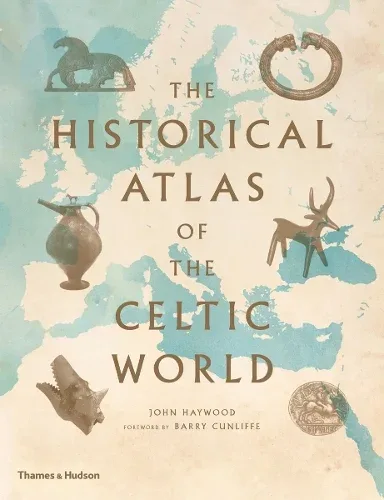
My next review is of The Historical Atlas of the Celtic World by John Haywood, bought in the same spending spree as Ancient Rome Infographics by Nicolas Guillerat, John Scheid and Milan Melocco. The two books are from the same publisher, Thames & Hudson, and were promoted together but they are quite different. I have to say I prefer this book, the graphics are less varied but the story comes through more clearly than Infographics.
The Historical Atlas is divided into 3 parts: The Continental Celts, The Atlantic Celts (Britain and Ireland) and The Modern Celts. Each part starts with a few pages of introduction followed by double page spreads on a range of topics – often a date range for the action is included. Typically these spreads will comprise a map, and some photos or diagrams. Overall it is a well-illustrated book.
The Celtic World is defined by Celtic languages including languages from Gaul (France), Italy and the Iberian peninsula that have long gone extinct. It once spanned central and Northern Europe, from the North of the Iberian Peninsula, across Northern Europe (including the Great Britain and Ireland) all the way to the Black Sea. Genetic evidence suggests origins as far back as 6000BC but the first archaeological evidence goes back to 800BC with the Hallstatt and La Tène cultures. Now all that remains is Ireland, Wales, Scotland, Cornwall, Brittany and Galicia in North West Spain – largely as a result of a revival of Celtic culture starting in the 18th century.
In terms of settlements, hillforts were popular across the Celtic world, as well as oppidum – fortified lowland towns. The British were nearly unique in preferring roundhouses over rectangular buildings found in the rest of Europe. In the North East of Scotland brochs (fortified towers) and duns (small forts) were popular in the later ancient period (500BC-200AD). It was only as the Roman Empire expanded that parts of the Celtic World started to urbanise.
Trade was long a feature of the Celtic World, going all the way from Ireland into the rest of Europe. As contacts with the Roman Empire increased, local Celtic leaders developed a taste for luxury goods. In exchange Romans took chain-mail, barrels, shipbuilding techniques and legionaries helmets from Celts – the Celts were not technologically backward.
Druidism was an important part of Celtic culture, it was not popular with the Romans since it purportedly involved human sacrifice, although it might be wise to take Roman writings on Celts with a pinch of salt – they were trying to justify invading them.
The first written records of Celts date to 600BC by which point they dominated Western and Central Europe. They sacked Rome in 390BC, and made in-roads into Greece for 20 years from 300BC amongst other invasions to the East, these rarely left any archaeological record. The Celtic civilisation was not centralised in the manner of the later Roman Empire, it was a looser confederation with a shared culture rather than power. This meant that when the Roman Empire expanded it was faced largely with smaller battles against isolated tribes and leaders rather than facing off against another empire.
The Roman’s took over the Celtic kingdoms as they started to centralise, failing in Germany where this centralisation did not really occur. The Roman’s invaded Gaul in the 50BCs, with a brief foray into England, which was not successfully invaded until 43AD. Roman dominion largely wiped out the Celtic languages of mainland Europe, although some culture survived. In Britain the South East became increasingly Romanised and urbanised, further to the north and west life continued largely as before.
When the Roman Empire fell Celtic culture did not make a great revival across continental Europe with the exception of Brittany which retained independence from France until 1532. Great Britain fell into its “Dark Ages” with the departure of the Romans, ultimately invaded by the Anglo-Saxons. Ireland, on the other hand, flourished – driven by Christianity and a system of monasteries that stood in for more traditional urban conurbations. The Irish went on to conquer the Picts in Scotland in the 9th century, so Scotland has an Irish origin. Wales had largely been subjugated by the English king, Edward I in the late 13th century. The Reformation triggered the English to take over Ireland, where they had long had a foothold. Later they would push into Scotland during the Jacobite Rebellion with this the Celtic countries disappeared.
However, in the 18th century a Celtic revival started, perhaps originating in the identification of the Celtic language group by Edward Lhuyd in 1707. It fitted with the Romantic idea of the noble savage, and also a desire by the people of Wales and Scotland to make themselves distinct in the newly united kingdom. Celtomania was a Europe-wide movement. The revived Druidism is a modern invention, we know close to nothing of the original Druidism. There was a further Celtic revival in the 1970s. Haywood is somewhat negative about the existing Celtic languages, seeing only Welsh as having a growing future.
I found this an interesting overview, it covers a great deal of time and space with many relatively small players. The double page spreads with maps help make this manageable. I think I was most surprised by the extent of the ancient Celtic world, and the influence of Ireland in the Early Middle Ages.
Apr 30 2026
Book review: King of kings by Scott Anderson
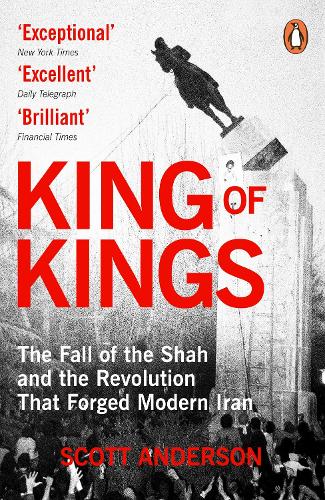
Another result of browsing in a bookshop, this review is of King of kings: The Fall of the Shah and the Revolution That Forged Modern Iran by Scott Anderson. For readers of the future – this review was written in April 2026, two months into the what is currently called the “2026 Iran War“.
King of Kings covers the run up to the Iranian revolution in 1979 mainly focussing on the 1970s and ends with the release of the American Embassy hostages in January 1981. The acknowledgements talk about the aim of the book being to capture the Revolution from the point of view of those involved through interviews with them. The book was published in 2025 and those interviewed are in their late seventies and older now.
I think it is inevitable that the focus is on American participants – Anderson specifically calls out Michael Metrinko and Gary Sick as key contributors. Sick was a member of the National Security Council under President Carter, and was the principal White House aide focused on the Persian Gulf. Metrinko was the US consul in the Iranian city of Tabriz in the run up to the Revolution and was one of the US Embassy hostages. However, Anderson also spoke with the Shah’s Queen, Farah Pahlavi who is still alive.
From the revolutionary side, those surrounding Ayatollah Ruhollah Khomeini – the spiritual leader of the revolution – there is relatively little. Ebrahim Yazdi, one of his closest advisors, gets a chapter and is referenced throughout the book.
King of kings is divided into three parts: the first titled “Towards a great civilisation” provides some background on Iran and the Shah – leader of Iran from 1953 until the 1979 Revolution; the second “The Unravelling” covers the build up to the revolution, mainly in 1978 and “Downfall” covers the revolution itself from the end of 1978 through to the return of the US embassy hostages in January 1981.
The Shah claimed a dynasty for Iran going back 2500 years, in fact one of the key events in the early part of this book was an extravagant celebration of this anniversary at Persepolis. Iran lay at the collision point between the the expanding British and Russian Empires in the 19th century, oil was discovered in 1908 and largely signed away to the British by the ruling Qajar dynasty. During the First World War Iran was a battleground for Russian and German forces, in the process 2 million Iranians died. In the Second World War Iran sought an accommodation with Germany which worked fine until Russia and Britain joined forces to invade Iran; they deposed Reza Khan, the Shah’s father in 1941 and installed him (Mohammad Reza) as monarch.
In the post-war period the country was governed by the Prime Minister Mohammad Mosaddegh who introduced a range of social reforms, and nationalised the oil industry much to the chagrin of the British and Americans who deposed him in a CIA backed coup in 1953 re-instating Mohammad Reza as an absolute monarch.
The Shah ran the country as a dictatorship although he introduced a large set of social reforms in his 1963 White Revolution which upset more conservative Muslims such as Khomeini.
Iran as a country became very wealthy very rapidly in the seventies as a result of the Shah nationalising the oil industry, and OPEC starting to exert itself (1973 is a key year here). At the same time the US essentially entirely opened up arms sales to Iran and the Shah was a very willing customer. But the wealth was very unevenly distributed, Iran urbanised rapidly bringing many young men into cities not prepared for them. These young men were often conservative from a religious point of view.
There had long been opposition groups in Iran but they were subject to arrest, violence from the secret police (SAVAK) or, like Khomeini, exile. Khomeini had been living in Iraq but Saddam Hussein was becoming increasingly unhappy with his presence and he fled to France in October 1978. This turned out to be a fortuitous move because he was much more able to hold court with Western journalists there with his lieutenants he was able to present a (completely fake) moderate face.
It’s difficult to pinpoint a point at which the revolution started, Iran is a Shia majority country and offers a wide range of dates for public displays of mourning which could be readily repurposed to rioting. This started happening with increasing frequency and surprising precision from the start of 1978 following a government sanctioned news paper editorial attacking Khomeini. Precision because very particular businesses and institutions were targeted by well-disciplined rioters. I think this is part of the story is missing something, it seems clear there was significant organisation on the ground of the revolutionary forces and there is no real indication of Khomeini being very actively involved in this.
The Revolution, when it came, followed the departure of the Shah from Iran on 16th January 1979 – having installed Shapour Bakhtiari as Prime Minister – an opposition leader of long standing – with a view to arranging a moderate post-revolutionary government. Ayatollah Khomeini returned to Iran on 1st February 1979. Outside of Iran he had been making moderate noises but on his return to Iran he resumed his theocratic radicalism, sacking the recently installed Prime Minister and adding his own. The army mutinied in favour of Khomeini’s forces. A number of senior figures from the previous regime were summarily executed within a month of Khomeini’s return. He then set about making a constitution that handed power entirely to clerics (and ultimately himself).
There was possibly a space for a more moderate government but that ended with the US embassy hostage crisis and the US’s botched rescue attempt. The Embassy had been invaded by radical university students and it is not clear whether Khomeini had sanctioned the attack but in any case he supported it once done. Also unclear is whether Ronald Reagan’s campaign team had influenced the Iranians to delay the release of the hostages – it seems very plausible – they were released on the eve of Reagan’s inauguration. Interestingly the Revolutionary Iranians were keen to do arms deals with the Americans since they had a large quantity of US military hardware and needed consumables resupply.
Anderson’s conclusion regarding the Revolution was that the Shah seemed strangely inert as the revolution approached, attributing this to him being a dictator but not of the sufficiently brutal, bloodthirsty type to put a stop to opposition. In common with all dictators he ended up surrounding himself with people that only agreed with him. I can’t help thinking his deteriorating health played a role – he died at the age of 60 in 1980 having fled Iran in January 1979, he had been fairly seriously ill for several years but kept it secret even from his wife.
The US was almost completely oblivious to the tide rising against the Shah, very few of their embassy staff spoke the local language (Farsi) and they were discouraged from speaking to any sort of opposition to the Shah. They were also doing good business with Shah for military hardware, and saw him as a moderate bastion and ally in the area. As the revolution unfolded the institutions of the US government were fairly actively fighting each other.
I found this gripping reading, partly because of its current relevance but also because it is well written. It is clear that the American focus does not capture the internal workings of the revolutionary forces very well but I suspect that is still a hard problem even now, for Middle Eastern writers.
Apr 21 2026
Book review: Ancient Rome Infographics by Nicolas Guillerat, John Scheid and Milan Melocco
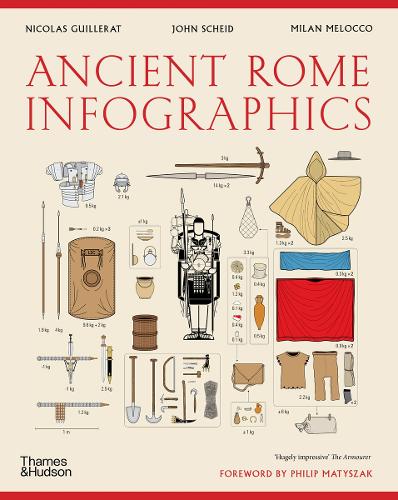
There’s no real alternative to a good browse around a bookshop, this book Ancient Rome Infographics by Nicolas Guillerat, John Scheid and Milan Melocco is the result of just such browsing. I’ve been interested in the history of Britain, and the important part the Romans played in it for a while so this was a welcome find. I’m interested in data visualisation, so it’s fair to say this is the sort of exercise I would undertake given data on the Roman Empire!
The authors emphasise several times that the underlying data for these infographics is sometimes uncertain and that there is pretty much no data prior to the fourth century BCE so this period is ignored. They provide an extensive bibliography although it is not referenced at an individual infographic level.
The book is divided into three parts:
- The Lands and People of the Empire
- Government, worship and social needs
- Rome’s military might
The infographics generally span a double page spread, and usually include explanatory text. I’m finding writing a review a bit challenging without reproducing the infographics, the publisher Thames & Hudson have some examples on their product page.
From the first section I liked the visualisation showing the physical extent of the Roman Empire and its growth in both population and area over time. I was surprised to learn that the Iberian peninsula contained a large chunk of the Roman population (5,000,000) compared to 7,000,000 in Italy. The population of Egypt was also significant (4,500,000) although it was absorbed rather later, in 27 BCE. The Roman Empire continued to expand until 150CE.
This section includes quite a lot of detailed information on Rome particularly in terms of the types of buildings in the city, and how the footprint of the city evolved over time. I assume that the Roman remains in Rome have been subject to a huge amount of study hence the large quantity of data. Rome grew to a population of 1.75 million in the 3rd century CE declining to 500,000 in the mid 5th century CE.
Also included are rather complex diagrams of the social and legal classes in Roman society. I must admit I found this less interesting. The authors mention several times that one of the strengths of the Roman Empire was that citizens from all the states across the Empire became fully fledged Roman citizens, as well as citizens of their local state. The social structure was very oriented around voting men, with the paterfamilias – the senior man in a household – essentially holding all of the rights the state bestowed which they distributed as they saw fit to their household. The paterfamilias might also have a patron-client relationship with others outside the household, I suspect this is one of many topics which warrants a whole book to elucidate.
The second section continues with the delineation of roles in society with the focus on the political and government. My favourite part here was the chronology of emperors which also introduced the term damnatio memoriae which is an attempt to expunge an emperor from the historical record. The term, although Latin, was coined in the 17th century. Some emperors had quite long reigns but at other times there were flurries of emperors, or at least those that proclaimed themselves so. This is where the infographic presentation falls down a bit – subtleties are lost because they cannot be presented cleanly. From towards the end of the third century CE there are Eastern and Western empires each with their own emperor and for a brief period there was the “Tetrarchy” – a system of two senior and two junior emperors.
Religion gets a few pages, Romans had a system of public and private “cults” – a city would follow a public cult with its ceremonies and rituals but individuals could also follow their own cult with a shrine and ritual in their home. Later the Christian faith was to spread through the Empire encompassing over half of the population by 350CE.
Also in this chapter is data on the production of grain, and the cost of living. For quite some period the residents of Rome had a “grain dole”, or annona which gave an allocation of grain to selected citizens of Rome (adult male citizens). The cost of living data is so interesting I’m tempted to do my own visualisations! For example 1 rabbit cost 32 as (a small Roman coin) but a pound of wild boar meet was only 8 as. 8 as would also buy you a prostitute but a bath was only 0.25 as. Slaves started at 800 as but went up to nearly 100,000 as for “1 very attractive slave”. A skilled worker could earn 12 as per day, a legionary (a junior rank) 10 as / day, a centurion 165 as / day and a senator 5480 as / day.
The final chapter covers war, I was a bit surprised to learn that the Roman army and navy were not that great but they made good use of local fighters and were good at simply being present. There are descriptions, and infographics of Roman marching orders, camp construction processes and the the evolving equipment of a Roman soldier. I sometimes wonder how accurately such prescriptions were followed, I assume there is at least one documentary source for these processes but how closely were they followed in the field?
I liked the visualisation showing movements of one Roman legionary through his career around Armenia and Eastern Europe. The Social Wars, Punic Wars, conquering Gaul and Spartacus have their own sections in this chapter. I’m assuming these are the most important of the Roman wars.
Overall I enjoyed this book, although I was sometimes frustrated by the complexity of the infographics. It works well as a taster for further investigation.
About

I've worked as a scientist for the last 30 years, at various universities, a large home and personal care company, a startup in Liverpool called The Sensible Code Company (formerly ScraperWiki Ltd), GBG and now as a consultant in data science.
I write about:
* the books I have read, typically science and history (or both), partly as a reminder to myself and partly as a review;
* science, things I have done or things I find interesting;
* technology, programming and gadgets;
politics, and current affairs;
* ...and other stuff as it takes my fancy - holidays, photographs and things I want to remember.