Category: Book Reviews

Reviews of books featuring a summary of the book and links to related material

Book Review: Learning Spark by Holden Karau, Andy Konwinski, Patrick Wendell and Matei Zaharia

This post was first published at ScraperWiki.
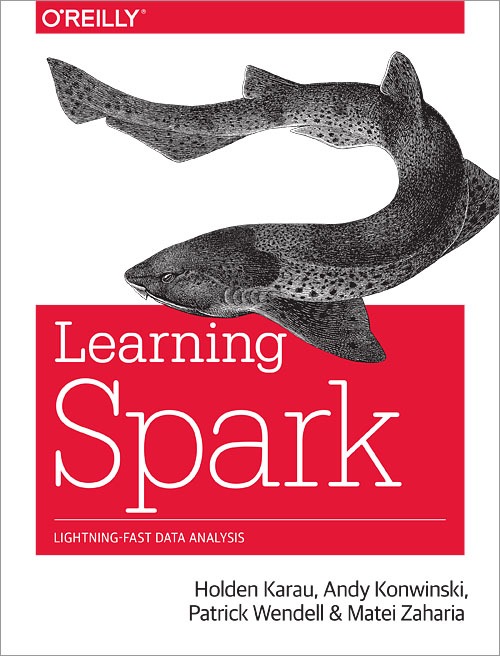
learning-spark-book-coverApache Spark is a system for doing data analysis which can be run on a single machine or across a cluster, it  is pretty new technology – initial work was in 2009 and Apache adopted it in 2013. There’s a lot of buzz around it, and I have a problem for which it might be appropriate. The goal of Spark is to be faster and more amenable to iterative and interactive development than Hadoop MapReduce, a sort of Ipython of Big Data. I used my traditional approach to learning more of buying a dead-tree publication, Learning Spark by Holden Karau, Andy Konwinski, Patrick Wendell and Matei Zaharia, and then reading it on my commute.

The core of Spark is the resilient distributed dataset (RDD), a data structure which can be distributed over multiple computational nodes. Creating an RDD is as simple as passing a file URL to a constructor, the file may be located on some Hadoop style system, or parallelizing an in-memory data structure. To this data structure are added transformations and actions. Transformations produce another RDD from an input RDD, for example filter() returns an RDD which is the result of applying a filter to each row in the input RDD. Actions produce a non-RDD output, for example count() returns the number of elements in an RDD.

Spark provides functionality to control how parts of an RDD are distributed over the available nodes i.e. by key. In addition there is functionality to share data across multiple nodes using “Broadcast Variables”, and to aggregate results in “Accumulators”. The behaviour of Accumulators in distributed systems can be complicated since Spark might preemptively execute the same piece of processing twice because of problems on a node.

In addition to Spark Core there are Spark Streaming, Spark SQL, MLib machine learning, GraphX and SparkR modules. Learning Spark covers the first three of these. The Streaming module handles data such as log files which are continually growing over time using a DStream structure which is comprised of a sequence of RDDs with some additional time-related functions. Spark SQL introduces the DataFrame data structure (previously called SchemaRDD) which enables SQL-like queries using HiveQL. The MLlib library introduces a whole bunch of machine learning algorithms such as decision trees, random forests, support vector machines, naive Bayesian and logistic regression. It also has support routines to normalise and analyse data, as well as clustering and dimension reduction algorithms.

All of this functionality looks pretty straightforward to access, example code is provided for Scala, Java and Python. Scala is a functional language which runs on the Java virtual machine so appears to get equivalent functionality to Java. Python, on the other hand, appears to be a second class citizen. Functionality, particularly in I/O, is missing Python support. This does beg the question as to whether one should start analysis in Python and make the switch as and when required or whether to start in Scala or Java where you may well be forced anyway. Perhaps the intended usage is Python for prototyping and Java/Scala for production.

The book is pitched at two audiences, data scientists and software engineers as is Spark. This would explain support for Python and (more recently) R, to keep the data scientists happy and Java/Scala for the software engineers. I must admit looking at examples in Python and Java together, I remember why I love Python! Java requires quite a lot of class declaration boilerplate to get it into the air, and brackets.

Spark will run on a standalone machine, I got it running on Windows 8.1 in short order. Analysis programs appear to be deployable to a cluster unaltered with the changes handled in configuration files and command line options. The feeling I get from Spark is that it would be entirely appropriate to undertake analysis with Spark which you might do using pandas or scikit-learn locally, and if necessary you could scale up onto a cluster with relatively little additional effort rather than having to learn some fraction of the Hadoop ecosystem.

The book suffers a little from covering a subject area which is rapidly developing, Spark is currently at version 1.4 as of early June 2015, the book covers version 1.1 and things are happening fast. For example, GraphX and SparkR, more recent additions to Spark are not covered. That said, this is a great little introduction to Spark, I’m now minded to go off and apply my new-found knowledge to the Kaggle – Avito Context Ad Clicks challenge!

Book review: Your Inner Fish by Neil Shubin

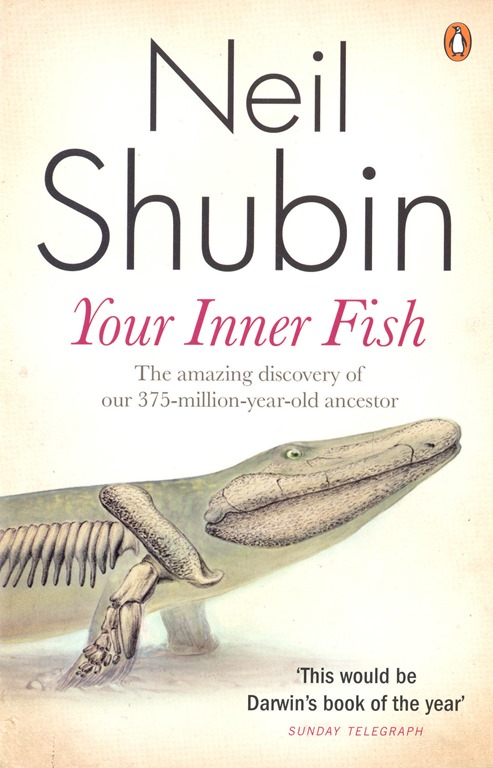
yourinnerfishI’m holiday so I’ve managed some more reading! This time Your Inner Fish by Neil Shubin. As recommended by my colleague, David Jones, at ScraperWiki.

This is ostensibly a story of a particular distant ancestor of humans, the first to walk on land 375 million years ago, but in practice it is broader than that. It is more generally about what it is to be a modern palaeontologist and taxonomy – the classification of living organisms.

Your Inner Fish is a personal account based around the work Shubin and his colleagues did in discovering the Tiktaalik species, the first walker, in the high Canadian Arctic. It turns out the distinguishing features of such animals are the formation of shoulders and a neck, underwater a fish can easily reorient its whole body to get its head facing the right way, on land a neck to move the head independently and shoulders to mount the front legs become beneficial. Shubin hypotheses that animals such as Tiktaalik evolved to walk on dry land to evade ever larger and more aggressive aquatic predators.

Shubin recounts the process that led him to the Arctic, starting with his earlier fossil hunting in road cuts in Pennsylvania. The trick to fossil hunting being finding bedrock of the right age being exposed in moderate amounts. Road cuts are a second best in the this instance, being rather small in scale. Palaeontologists find their best hunting grounds in deserts and the barren landscape of the north. Finding the right site is a combination of identifying where rocks of the right age are likely to be exposed and knowing whether someone has looked there already.

Once you are in the field, the tricky part comes: finding the fossils. This is a skill akin to being able to resolve a magic eye puzzle. This is a skill which is learnt practically in the field rather than theoretically in the classroom. I’m struck by how small some of the most important fossil sites are, Shubin shows a photo of the Tiktaalik site where 6 people basically fill it. The Walcott Quarry in the Burgess Shale is similarly compact.

The central theme of the book is the one-ness of life, in the sense that humans share a huge amount of machinery with all living things to do with the business of building a body. These days the focus of such interest is on DNA, and the similarity of genes and the proteins they encode across huge spans of the tree of life. In earlier times these similarities were identified in developmental processes and anatomy. It is significant that researchers such as Shubin span the fossil, development and genetic domains.

Anatomically fish, lizards, mammals and birds represent the reshuffling of the same components. The multiple jaw bones found in sharks and skates turn into the bones of the inner ear in mammals. The arches which form gills in fish morph and adapt in mammals to leave a weird layout of nerves in the face and skull. These similarities in gross anatomical features are reflected in the molecular machinery which drives development, the formation of complex bodies from a single fertilised cell. Organiser molecules are common across vertebrates.

It’s worth noting the contribution of Hilde Mangold to the development story, her supervisor Hans Spemann won the 1935 Nobel Prize for medicine based in part on the work differentiation in amphibian embryos she had presented in her 1923 thesis. She died at the age of 26 in 1924 as the result of an explosion in her apartment building. Nobel Prizes are only awarded to the living.

Why study this taxonomy? The reasons are two-fold, there is the purely intellectual argument of “because it is there”. The shared features of life are one of the pieces of evidence underpinning the theory of evolution. The second reason is utilitarian, linking all of life into a coherent structure gives us a better understanding of our own bodies, and how to fix them if they go wrong.

As examples of our faulty body Shubin highlights hiccups and hernias. Hiccups because the reflexes leading to hiccups are the descendants of the reflexes of tadpoles which allowed them to breathe through gills as well as lungs. Hernias because the placement of the testes outside the abdomen is an evolution from our fish ancestors who kept gonads internally – external placement is a botched job which leads to a weakness in the abdomen wall, particularly in men.

This book is shorter and more personal than Richard Dawkins’ and Stephen Jay Gould’s work in similar vein.

I liked it.

Book review: Gut by Giulia Enders

Gut-by-giulia-endersIt seems a while since I last reviewed a book here. Today I bring you Gut: The Inside Story of our Body’s Most Underrated Organ by Giulia Enders.

The book does exactly what it says on the tin: tell us about the gut. This is divided into three broad sections. Firstly the mechanics of it all, including going to the toilet and how to do it better. Secondly, the nervous system and the gut, and finally the bacterial flora that help the gut do its stuff.

The writing style seems to be directed at the early to mid-teenager which gets a bit grating in places. Sometimes things end up outright surreal, salmonella wear hats and I still don’t quite understand why. The text is illustrated with jaunty little illustrations.

From the mechanical point of view several things were novel to me: the presence of an involuntary internal sphincter shortly before the well-known external one. The internal sphincter allows “sampling” of what is heading for the outside world giving the owner the opportunity to decide what to do with their external sphincter.

The immune tissue in the tonsillar ring was also a new to me, its job is to sample anything heading towards the gut. This is most important in young children before their immune systems are fully trained. Related to the tonsils, the appendix also contain much immune tissue and has a role in repopulating the bacteria in the large intestine with more friendly sorts of bacteria following a bout of diarrhoea.

The second section, on the nervous system of the gut covers things such as vomiting, constipation and the links between the gut and depression.

The section on the bacterial flora of the gut gathers together some of the stories you may have already heard. For example, the work by Marshall on Helicobactor Pylori and its role in formation of stomach ulcers. What I hadn’t realised is that H. Pylori  is not thought to be all bad. Its benefits are in providing some defence against asthma and autoimmune diseases. Also in this section is toxoplasmosis, the cat-born parasite which can effect rats and humans, making them more prone to risk-taking behaviour.

I was delighted to discover the use to which sellotape is put in the detection of threadworms – potential sufferers are asked to collect threadworm eggs from around the anus using sellotape. I can imagine this is an unusual experience which I don’t intend to try without good reason.

There is a small amount of evangelism for breast-feeding and organic food which I found a little bit grating.

As usual with electronic books I hit the references section somewhat sooner than I expected, and here there is a clash with the casual style of the body of the book. Essentially, it is referenced as a scientific paper would be – to papers in the primary literature.

I don’t feel this book has left me with any great and abiding thoughts but on the other hand learning more about the crude mechanics of my body is at least a bit useful.

Book review: Mastering Gephi Network Visualisation by Ken Cherven

1994_7344OS_Mastering Gephi Network Visualization

This review was first posted at ScraperWiki.

A little while ago I reviewed Ken Cherven’s book Network Graph Analysis and Visualisation with Gephi, it’s fair to say I was not very complementary about it. It was rather short, and had quite a lot of screenshots. It’s strength was in introducing every single element of the Gephi interface. This book, Mastering Gephi Network Visualisation by Ken Cherven is a different, and better, book.

Networks in this context are collections of nodes connected by edges, networks are ubiquitous. The nodes may be people in a social network, and the edges their friendships. Or the nodes might be proteins and metabolic products and the edges the reaction pathways between them. Or any other of a multitude of systems. I’ve reviewed a couple of other books in this area including Barabási’s popular account of the pervasiveness of networks, Linked, and van Steen’s undergraduate textbook, Graph Theory and Complex Networks, which cover the maths of network (or graph) theory in some detail.

Mastering Gephi is a practical guide to using the Gephi Network visualisation software, it covers the more theoretical material regarding networks in a peripheral fashion. Gephi is the most popular open source network visualisation system of which I’m aware, it is well-featured and under active development. Many of the network visualisations you see of, for example, twitter social networks, will have been generated using Gephi. It is a pretty complex piece of software, and if you don’t want to rely on information on the web, or taught courses then Cherven’s books are pretty much your only alternative.

The core chapters are on layouts, filters, statistics, segmenting and partitioning, and dynamic networks. Outside this there are some more general chapters, including one on exporting visualisations and an odd one on “network patterns” which introduced diffusion and contagion in networks but then didn’t go much further.

I found the layouts chapter particularly useful, it’s a review of the various layout algorithms available. In most cases there is no “correct” way of drawing a network on a 2D canvas, layout algorithms are designed to distribute nodes and edges on a canvas to enable the viewer to gain understanding of the network they represent.  From this chapter I discovered the directed acyclic graph (DAG) layout which can be downloaded as a Gephi plugin. Tip: I had to go search this plugin out manually in the Gephi Marketplace, it didn’t get installed when I indiscriminately tried to install all plugins. The DAG layout is good for showing tree structures such as organisational diagrams.

I learnt of the “Chinese Whispers” and “Markov clustering” algorithms for identifying clusters within a network in the chapter on segmenting and partitioning. These algorithms are not covered in detail but sufficient information is provided that you can try them out on a network of your choice, and go look up more information on their implementation if desired. The filtering chapter is very much about the mechanics of how to do a thing in Gephi (filter a network to show a subset of nodes), whilst the statistics chapter is more about the range of network statistical measures known in the literature.

I was aware of the ability of Gephi to show dynamic networks, ones that evolved over time, but had never experimented with this functionality. Cherven’s book provides an overview of this functionality using data from baseball as an example. The example datasets are quite appealing, they include social networks in schools, baseball, and jazz musicians. I suspect they are standard examples in the network literature, but this is no bad thing.

The book follows the advice that my old PhD supervisor gave me on giving presentations: tell the audience what you are go to tell them, tell them and then tell them what you told them. This works well for the limited time available in a spoken presentation, repetition helps the audience remember, but it feels a bit like overkill in a book. In a book we can flick back to remind us what was written earlier.

It’s a bit frustrating that the book is printed in black and white, particularly at the point where we are asked to admire the blue and yellow parts of a network visualisation! The referencing is a little erratic with a list of books appearing in the bibliography but references to some of the detail of algorithms only found in the text.

I’m happy to recommend this book as a solid overview of Gephi for those that prefer to learn from dead tree, such as myself. It has good coverage of Gephi features, and some interesting examples. In places it is a little shallow and repetitive.

The publisher sent me this book, free of charge, for review.

Book review: Cryptocurrency by Paul Vigna and Michael J. Casey


cryptocurrencyThis review was first posted at ScraperWiki.

Amongst hipster start ups in the tech industry Bitcoin has been a thing for a while. As one of the more elderly members of this community I wanted to understand a bit more about it. Cryptocurrency: How Bitcoin and Digital Money are Challenging the Global Economic Order by Paul Vigna and Michael Casey fits this bill.

Bitcoin is a digital currency: the Bitcoin has a value which can be exchanged against other currencies but it has no physical manifestation. The really interesting thing is how Bitcoins move around without any central authority, there is no Bitcoin equivalent of the Visa or BACS payment systems with their attendant organisations or central back as in the case of a normal currency. This division between Bitcoin as currency and Bitcoin as decentralised exchange mechanism is really important.

Conventional payment systems like Visa have a central organisation which charges retailers a percentage on every payment made using their system. This is exceedingly lucrative. Bitcoin replaces this with the blockchain – a distributed ledger in which transactions are encrypted. The validation is carried out by so-called ‘miners’ who are paid in Bitcoin for carrying out a computationally intensive encryption task which ensures the scarcity of Bitcoin and helps maintain its value. In principle anybody can be a Bitcoin miner, all they need is the required free software and the ability to run the software. The generation of new Bitcoin is strictly controlled by the fundamental underpinnings of the blockchain software. Bitcoin miners are engaged in a hardware arms race with each other as they compete to complete units on the blockchain, more processing power equals more chances to complete blocks ahead of the competition and hence win more Bitcoin. In practice mining meaningful quantities these days requires significant, highly specialised hardware.

Vigna and Casey provide a history of Bitcoin starting with a bit of background as to how economists see currency, this amounts to the familiar division between the Austrian school and the Keynesians. The Austrians are interested in currency as gold, whilst the Keynesians are interested in Bitcoin as a medium for exchange. As a currency Bitcoin doesn’t appeal to Keysians since there is no “quantitative easing” in Bitcoin, the government can’t print money.

Bitcoin did not appear from nowhere, during the late 90s and early years of the 20th century there were corporate attempts at building digital currencies. These died away, they had the air of lone wolf operations hidden within corporate structures which met their end perhaps when they filtered up to a certain level and their threat to the current business model was revealed. Or perhaps in the chaos of the financial collapse.

More pertinently there were the cypherpunks, a group interested in cryptography operating on the non-governmental, non-corporate side of the community. This group was also experimenting with ideas around digital currencies. This culminated in 2008 with the launch of Bitcoin, by the elusive Satoshi Nakamoto, to a cryptography mailing list. Nakamoto has since disappeared, no one has ever met him, no one knows whether he is the pseudonym of one of the cypherpunks, and if so, which one.

Following its release Bitcoin experienced a period of organic growth with cryptography enthusiasts and the technically curious. With the Bitcoin currency growing an ecosystem started to grow around it beginning with more user-friendly routes to accessing the blockchain – wallets to hold your Bitcoins, digital currency exchanges and tools to inspect the transactions on the blockchain.

Bitcoin has suffered reverses, most notoriously the collapse of the Mt Gox currency exchange and its use in the Silk Road market, which specialised in illegal merchandise. The Mt Gox collapse demonstrated both flaws in the underlying protocol and its vulnerability to poorly managed components in the ecosystem. Alongside this has been the wildly fluctuating value of the Bitcoin against other conventional currencies.

One of the early case studies in Cryptocurrency is of women in Afghanistan, forbidden by social pressure if not actual law from owning private bank accounts. Bitcoin provides them with a means for gaining independence and control over at least some financial resources. There is the prospect of it becoming the basis of a currency exchange system for the developing world where transferring money within a country or sending money home from the developed world are as yet unsolved problems, beset both with uncertainty and high costs.

To my mind Bitcoin is an interesting idea, as a traditional currency it feels like a non-starter but as a decentralized transaction mechanism it looks very promising. The problem with decentralisation is: who do you hold accountable? In two senses, firstly the technical sense – what if the software is flawed? Secondly, conventional currencies are backed by countries not software, a country has a stake in the success of a currency and the means to execute strategies to protect it. Bitcoin has the original vision of a vanished creator, and a very small team of core developers. As an aside Vigna and Casey point out there is a limit within Bitcoin of 7 transactions per second which compares with 10,000 transactions per second handled by the Visa network.

It’s difficult to see what the future holds for Bitcoin, Vigna and Casey run through some plausible scenarios. Cryptocurrency is well-written, comprehensive and pitched at the right technical level.