Tag: chemistry

Book review: Alchemy by Philip Ball

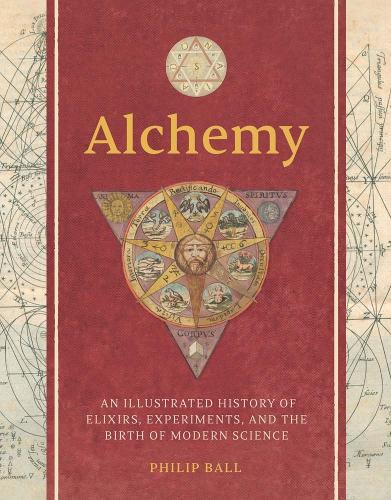
I seem to have been on a run of illustrated books, perhaps as a result of regular visits to a local bookshop, illustrated books have more shelf appeal! This review is of Alchemy by Philip Ball with the lengthy subtitle; An Illustrated History of Elixirs, Experiments, and the birth of Modern Science. My copy is a larger format hardback book: a little shorter than A4 but about as wide. The illustrations are well-reproduced and mixed with the text although each chapter finishes with a series of illustrations with captions.

The book is divided into nine thematic chapters which are very roughly in chronological order. They cover the origins of alchemy, key interests of alchemists, laboratory equipment and the transition to modern chemistry with a final chapter on alchemy in culture.

Ancient Egyptians were key to early alchemy, making sophisticated glassware by the mid to late 15th century BC – the earliest glass dates to 2500BC. They were also making a wide range of chemical preparations including dyes, glazes and cosmetics.

The earliest Egyptian texts regarding alchemy date to the 3rd century AD, they were subsequently translated and greatly expanded by Islamic scholars towards the end of the first millennium from there they entered Europe during the Renaissance. Alchemists were also active in India and China from around at least the beginning of the Current Era.

Alchemy seems to have been prone to poorly attributed texts. For example, many texts are attributed to Jabir ibn Hayyan who probably lived in the 9th century – the broader corpus which he can’t have written is referred to as by “pseudo-Geber”. I wonder whether this issue is more widespread in early writing – a result of the pre-print mechanisms of publishing – rather than just an issue with alchemy.

In common with other scientific and artistic enterprises, alchemists often relied on royal patronage – Holy Roman Emperor Rudolf II (1552-1612) was a keen patron of alchemy in Prague.

Alchemy led to the birth of the laboratory as a separate space filled with a range of equipment which looks familiar even now. A variety of heat sources were central to this, alchemists were referred to as “puffers” as a result of their use of bellows to drive furnaces. The crucible, found in the lab today, comes from the Latin for “little place of torment”! Crucibles from the Hesse region of Germany were particularly sought after – it seems the local clay was very conducive to making crucibles. The bain-marie was invented as an alchemical tool by a, possibly mythical, female alchemist. Distillation, an important process even now, goes back to the 2nd millennium BC.

Converting other metals into gold, transmutation, was a primary concern for Western alchemists for pretty much the entire period that alchemists existed. The earliest bronze, made around 3500BC, was made by heating mixtures of ores not the pure metal, pure tin – one of the components of bronze, was not isolated until 1800BC. Our modern idea of elements dates is fairly recent, dating back to the 17th century. In the beginning the different elemental metals were not easily distinguishable from mixtures or even other elemental metals. Metal workers knew that rocks could be transformed to metals, and that metals could themselves could be transformed.

So why not transmutation? Even Robert Boyle, writing in the 17th century, was not convinced that transmutation was impossible.

Once elements were “discovered” it was realised that converting one element into another element (gold) is impossible. There is a proviso here though, 20th century atomic physics shows that elements can be transformed into other elements by nuclear processes but not by the chemical processes to which alchemists had access. As the physicist Ernest Rutherford said to his colleague Frederick Soddy “For Mike’s sake, Soddy, don’t call it transmutation. They’ll have our heads off as alchemists!”.

Transmutation was not the only subject of alchemical study, as well as broader chemical studies, in the East the search for elixirs to extend life was of more concern. Presumably more esoteric alchemical work sat alongside what we would now consider to be industrial chemistry.

In the West Paracelsus was creating a new sort of medicine based on chemistry rather than the four humours of ancient Greece. Philip Ball has written a biography of Paracelsus which I reviewed here. There’s a parallel here with the alchemists starting to break away from the classical elements (earth, water, fire, air, and aether) – in the same way that Copernicus and Galileo were breaking away from the Ptolemaic model of the universe.

It’s worth noting that the ability to make gold from other metals was potentially disastrous from an economic point of view – attempting to make gold was banned by both the Pope and Henry IV in the 14th and 15th centuries. The search for the philosopher’s stone (a material to carry out transmutation) came to be seen outside alchemy as both a fraudulent activity for some alchemists and a road to ruin for others, it was a byword for obsessive pursuits. Esotericism was long a feature of alchemy, the idea of keeping knowledge only for select adepts.

Throughout this review I have struggled as to when to write “alchemy” and when “chemistry”. Robert Boyle’s 1661, The Skeptical Chymist is often cited as a polemic against alchemy but it was more an effort to identify what was good and what was bad in alchemy to build what was to become chemistry. Some 20th century historians of science were dismissive of alchemy, seeing it as mysticism, hopeless causes and fraud perhaps influenced by the alchemy revival in the 19th century, which focussed on the spiritual side of alchemy. The alchemy Ball describes is one of chemicals, processes and a system of the world which transformed into modern chemistry through the 17th and 18th century with the loss of its mystical, and fraudulent elements.

Alchemy has always been referenced in wider culture, we still talk about alchemy now to reference processes which are almost magical in their effectiveness. I enjoyed this book, it has prompted me to seek out more books about alchemy – Ball includes a useful list of further reading.

Book review: Mauve by Simon Garfield

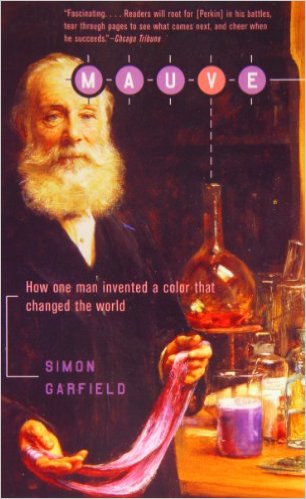
mauveMauve: How one man invented a color that changed the world by Simon Garfield is a biography of William Perkin. Who first synthesised the aniline dye, mauve, in 1856 at the age of 18.

Synthetic dyes were to form the catalyst for the modern chemical industry, an area close to my heart since I worked at Unilever on fluorescent and “shader” dyes for the colouring of laundry and teeth. For my undergraduate degree and PhD I was close to organic synthesis labs but didn’t participant with any any enthusiasm (everything gets mixed up and you can poison, burn or explode yourself!).

The book starts with a trip by William Perkin to the United States in 1906, and a series of events to celebrate the fiftieth anniversary of his discovery. It’s very reminiscent of similar celebrations on a visit of Lord Kelvin at around the same time. By the later years of his life he was lauded in his field, if not so much beyond it.

Chemistry as a subject was relatively unformed in the middle years of the 19th century. Lavoisier, Davy, Dalton and others had laid the foundations of the modern subject in the early years of the century but it looked nothing like it does today. Chemical formulae were understood but their structural meaning was still a mystery and certainly not liable to routine elucidation. There were chemical industries of sorts, such as the manufacture of gunpowder, the preparation of dyes and tanning. Coal gas was made from coal, producing a variety of by-products including coal tar.

Perkin was studying at the Royal College of Chemistry as an assistant to August Hofmann who was focused on the idea of synthesising quinine from coal tar. He had been encouraged in his scientific studies by Faraday, and Hoffmann had personally intervened with his father for him to study at the Royal College, who had a career in architecture in mind for him.

There is a superficial similarity in the chemical compositions of aniline, a component of coal tar, and quinine. At the time it seemed plausible to synthesis the one from the other. Quinine was highly valued as an antimalarial drug whose supply was very limited. In the end quinine was not to be synthesised until 1944 by Robert Woodward. The synthesis of useful analogues of natural compounds continues to be one of the driving forces in synthetic chemistry.

In 1856, whilst trying to make quinine, Perkin synthesised an attractive colour (mauve) that dyed silk. Such a discovery was not entirely novel or unknown, the colouring properties of coal tar derivatives had been observed before. However, Perkin saw commercial potential and approached a Scottish dye manufacturer, Robert Pullar for advice. At the time dyes such as madder, indigo and cochineal were derived from animal or vegetable matter and were expensive and unpredictable. The natural growth process meant you were never quite sure of the quality of product you were making, or using.

Colouring something is only half the story with dyes, it is also important that the dye sticks to the target and stays there after washing or exposure to light. The techniques and materials for achieving this depends on whether the target is cotton, silk, wool, paper or whatever. With a new class of dyes, new techniques were required. So alongside the colouring material Perkin also provided technical services to help his customers use the dyes he made.

The business was boosted when mauve became a fashionable colour, worn by Queen Victoria. Perkin grew his factory in Greenford, and ultimately sold it when he was 35 for around £100,000 (which appears to be something around £75million in current value). After this he seems to have focused on further research rather than any other commercial venture. His motivation for selling up seemed to be that German companies had become dominant in the production of dye. It was felt that they had better access to trained technical personnel, and their companies were more willing to spend money on research (a complaint still heard today). Then, as now, it was argued that the British were good at inventing but not exploiting.

From dyes the synthetic chemical industries expanded into new areas. In the first instance dyes were useful in themselves in preferentially staining different microscopic structures. It was then discovered that some of them had biological activity, such as methylene blue. And from the aniline dyes were synthesised the antibiotic sulfa drugs and then other, uncoloured medicines.

The synthetic adventure was to continue with synthetic polymers which, in common with mauve, started as an unpromising black sludge at the bottom of a reaction vessel.

The chemical industry in Britain was resuscitated by World War I. Britain found itself dependent on German companies for dyes for military uniforms and precursors to explosives at the onset of war. The strategy, repeated across many industries, was for government to take direct control with the resulting organisations continuing after the war. For the chemical industry this lead to formation of ICI, Imperial Chemical Industries. The manufacture of bulk chemicals has largely moved to China now and ICI broke up and was sold between the early nineties and 2010.

Mauve is an enjoyable read but lacks depth.

The Periodic Table

Understanding the Periodic Table is very much like making love to a beautiful woman, there’s no point rote-learning the location of the different elements if you don’t know what they do… langtry_girl*

The Periodic Table of the Elements is a presentation of the known elements which provides information on the relationships between those elements in terms of their chemical and physical properties. An element is a type of atom: iron, helium, sulphur, aluminium are all examples of elements. Elements cannot be broken down chemically into other elements, but elements can change. An atom is comprised of electrons, protons and neutrons.

This is all very nice, but if you look around you: at the wallpaper, the computer screen, the table – very little of what you see is made from pure elements. They’re made from molecules (pure elements joined together), and the molecules are arranged in different ways which may be completely invisible. So in a sense the periodic table represents the bottom of the tree of knowledge for people interested in materials, other scientists may be more interested in what makes up the elements.

The periodic table, approximately as it is seen today, was discovered by Dmitri Mendeleev in 1869, he designed it based on the properties of the elements known at that time. For a scientist the Periodic Table is pleasing, it says of the elements: “this many and no more”. It also stands as one of the great scientific predictions: Mendeleev proposed new elements based on his table constructed from the known elements and ,behold, they appeared with roughly the properties he expected.
Mendeleev’s periodic table was a work of organisation, it later turned out through the discovery of quantum mechanics that the periodicity and order found in the table can be derived from the behaviour of electrons in atoms.
To reverse a little, there is scope for more elements in the periodic table, they appear tacked on at the end of the table and are made artificially. The experimental scheme to achieve this is to fire atoms of existing elements into each other in the in the hope that they’ll fuse, occasionally they do, but the resulting atoms have a fleeting existence. They are rarely found in any number and vanish in fractions of a second, they are not elements of which you can grab hold. This has always struck me as being akin to flinging the components of a car off a cliff and claiming you have made a car when momentarily the pieces look like a car as they plummet to the ground.
I had a struggle here deciding whether to describe the periodic table as being designed, invented, or discovered. I stuck with discovered, because discovering is what scientists do, inventing is for inventors and designing is for designers ;-) It does raise an interesting philosophical question which has no doubt been repeatedly discussed down through the ages.

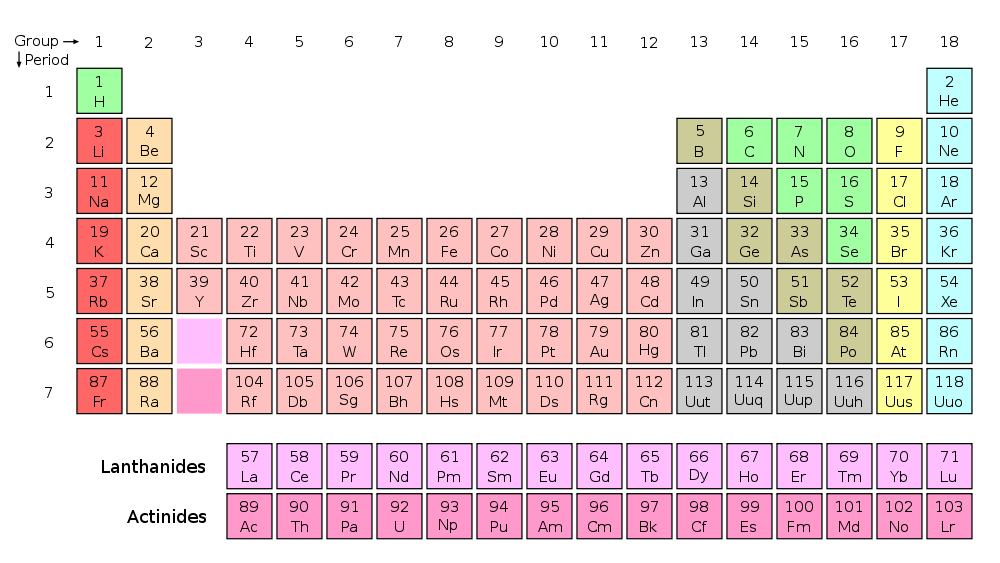
As a design, shown above, the periodic table is a cultural icon which everyone knows. Even if they don’t understand what it means, they know what it stands for – it stands for science. How to make sure people know your scene is set in a lab or your character is a scientist? Bung in a periodic table. It has been purloined to organise other sorts of information, such as Crispian Jago’s rather fine “Periodic Table of Irrational Nonsense“, some more examples here. There is a song.

At various times in my life I’ve been able to name and correctly locate all the elements in the periodic table, normally takes a bit of effort and some mnemonics to help. Increasingly now, I can remember the mnemonics but not the elements they refer to.

Different parts of the periodic table are important to different sorts of scientists. To organic chemists carbon (C), hydrogen (H), oxygen (O), nitrogen (N) hold the majority of their interest with walk on parts for some of the transition metals (the pink ones in a block in the middle) which act as catalysts. Inorganic chemists are more wide ranging, only really forbidden from the Noble Gases (helium (He), neon(Ne), argon (Ar), krypton (Kr), xenon (Xe)) which refuse to react with anything. Semi-conductor physicists are after the odd “semi-metals”: silicon (Si), indium (In), gallium (Ga), germanium (Ge), arsenic (As). For magnets there’s iron (Fe), cobalt (Co), nickel (Ni) along with other transition metals and the Lanthanides. The actinides are for nuclear physicists, radiation scientists and atomic bomb makers. Hydrogen is for cosmologists. In this view, as a soft condensed matter physicist, I am closest to the organic chemists.

I’m rather fond the periodic table, it is the scientist’s badge, but I’m scared of fluorine.

*To be fair to langtry_girl, I pondered on twitter “Trying to finish the sentence: “Understanding the Periodic Table is very much like making love to a beautiful woman…” and I think hers was the best reply. It is, of course, a reference to Swiss Toni.