Tag: review

Review of the year: 2015

Another year comes to an end and it time to write my annual review. As usual my blog has been a mixture, with book reviews the most frequent item. I also wrote a bit about politics and some technology blog posts. You can see a list of my posts this year on the index page. My technology blog posts are about programming, and the tools that go with it – designed as much to remind me of how I did things as anything else.

My most read blog post this year was a technical one on setting up Docker to work on a Windows 10 PC – it appears to have gone out in an email to the whole Docker community. For the non-technical reader, Docker is like a little pop up workshop which a programmer can take with them wherever they go, all their familiar tools will be found in their Docker container. It makes sharing the development of software, and deploying it different places, much easier. 

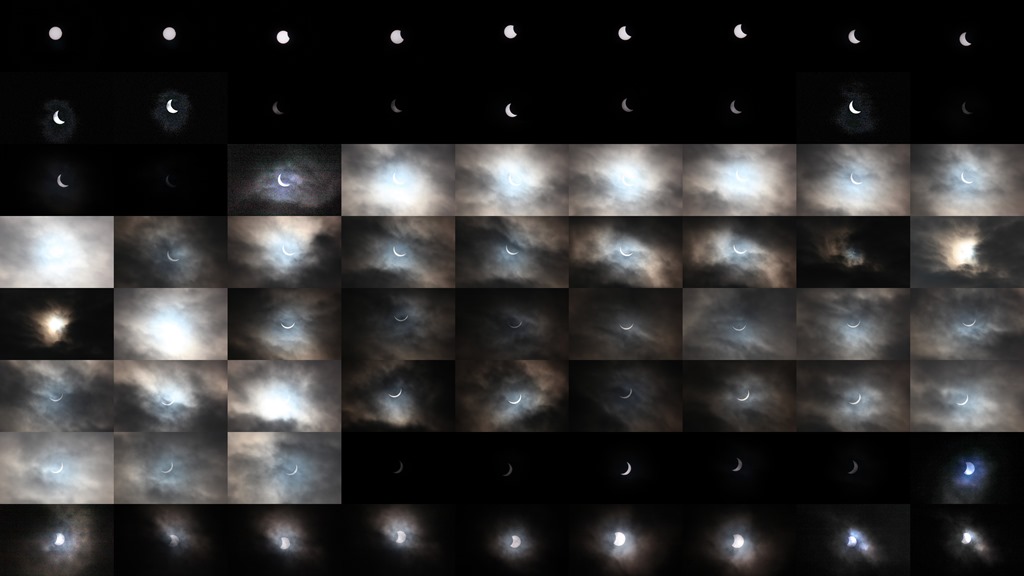
Actually my most read blog post this year was the review of my telescope, which I wrote a few years ago – it clearly has enduring appeal! Sadly, I haven’t made much use of my telescope recently but I did reuse my experience to photograph the partial eclipse, visible in north west England in March. I took a whole pile of photographs and wrote a short blog post. It is a montage of my eclipse photos which graces the top of this post. I think the surprising thing for me was how long the whole thing took.

In book reading there was a mixture of technical books which I read in relation to my work, and because I am interested. My favourite of these was High Performance Python by Micha Gorelick and Ian Ozsvald, which lead me to thinking more deeply about my favoured programming language. I read a number of books relating to the history of science. The Values of Precision by edited by M. Norton Wise stood out – this was an edited collection about the evolution of precision in the sciences since population studies in pre-Revolutionary France. Many of the themes spoke directly to my experience as a scientist, and it was interesting to read about them from the point of view of historians. Andrea Wulf’s biography of Alexander von Humboldt was also very good. 

There was a General Election this year, which led to a little blogging on my part and then substantial trauma (as a Liberal Democrat). I stood for the local council in the “Chester Villages” ward, where I beat UKIP and the Greens (full results here), sadly the Chester Liberal Democrats lost their only seat on the Cheshire West and Chester Council.

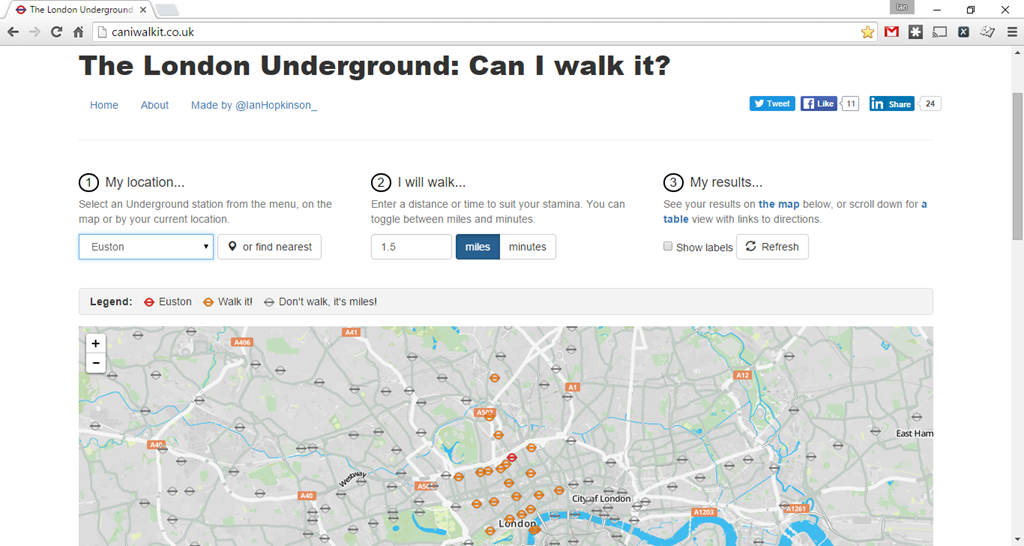
I did a couple of little technical projects for my own interest over the year. I made my London Underground – Can I walk it? tool which helps the user decide whether to walk between London Underground stations, the distance between them often being surprisingly short in the central part of London. The distinguishing features of this tool is that it is dynamic, and covers walking distances which are not just nearest neighbour of the current line. You can find the website here. This little project incorporated a number of bits of technology I’d learnt about over the past few years, and featured help from David Hughes on the design side – you can see the result bellow.
image

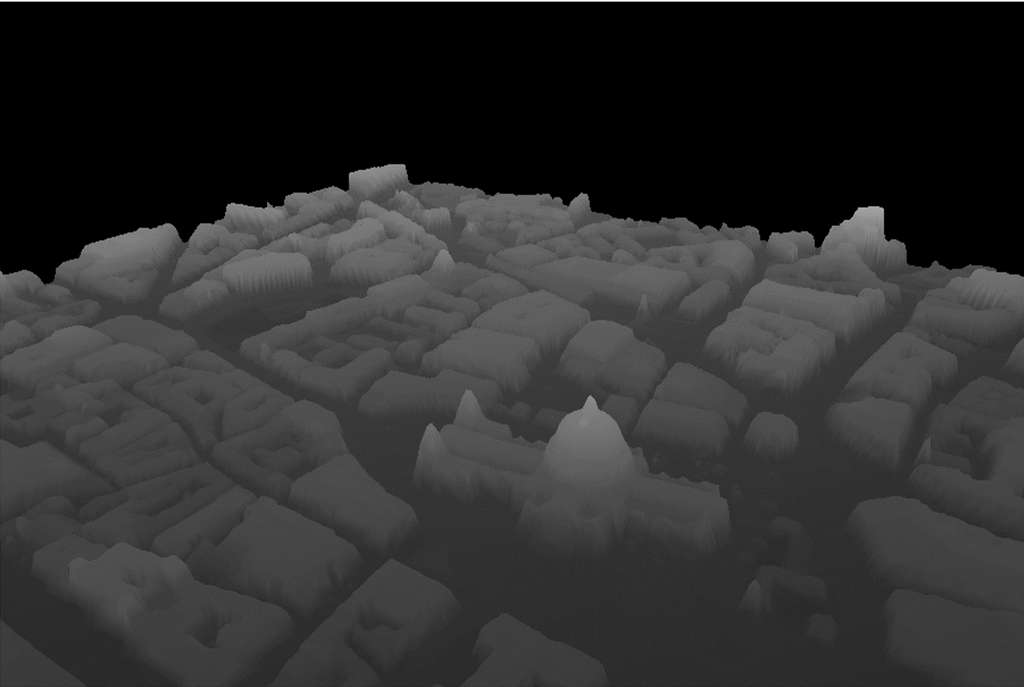
My second project was looking at the recently released LIDAR data from the Environment Agency, I wrote about it here. LIDAR is a laser technique for determining the height of the land surface (or buildings, if they are in the way) to a high resolution – typically 1 metre but down to 25cm in some places. The data cover about 85% of England. The Environment Agency use the data to help plan flood and coastal defences, amongst other applications. I had fun overlaying the LIDAR imagery onto maps, and rendering it in 3D, below you can see St Paul’s cathedral rendered in 3D.
I changed job in the Autumn, moving from ScraperWiki in Liverpool to GB Group in Chester. In my new job I’m spending my days playing with data, and attending virtually no meetings – so all good there! Also my commute to work is a 25 minute cycle which I really enjoy. But I really value the experience I got at ScraperWiki. As a startup with an open source mentally I learnt lots of new things and could talk about them. I also got to work with some really interesting customers. It brought home to me how difficult it is to make a business work, it’s not enough just to do something clever – somebody has to pay you enough to do it – and that’s actually the really hard part.

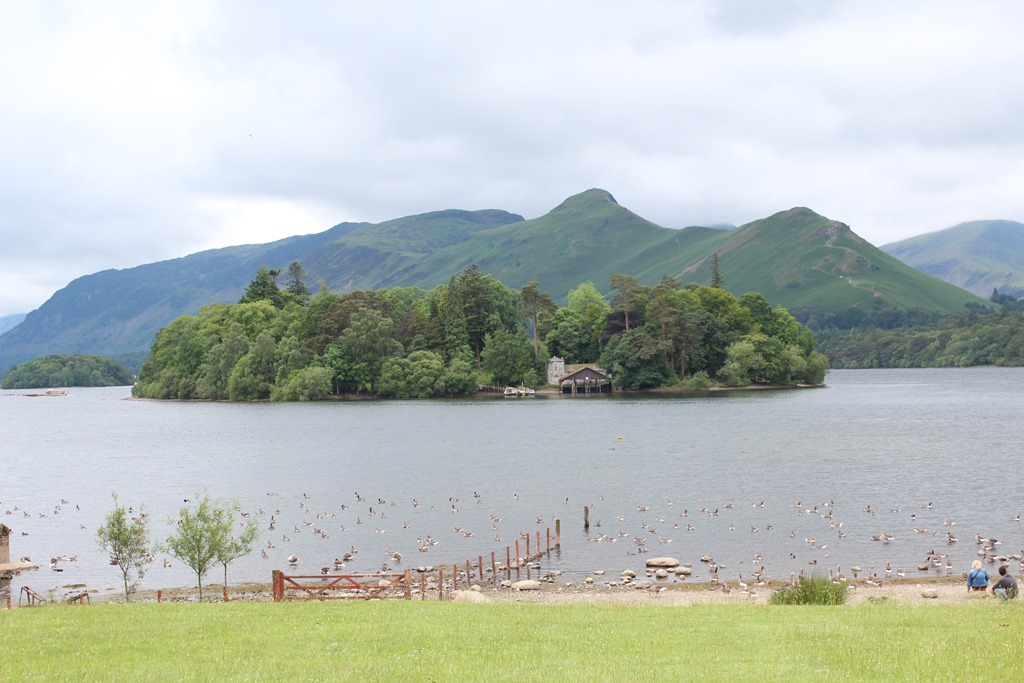
I wrote a now obligatory holiday blog post. We stayed in Portinscale, just outside Keswick for our holiday at a time when the weather was rather better. The highlight of the trip for me was the Threlkeld Mining Museum, a place where older men collect old mining equipment for their entertainment and that of small children. Although Allan Bank in Grasmere was a close second, Allan Bank is a laid back hippy commune style National Trust property. Below you can see a view of Derwent Water to Catbells from Keswick.
A couple of things I haven’t blogged about: I started running in May and since then I’ve gone from running 5km in 34 minutes to 5km in 24 minutes, I’ve also lost 10kg. I should probably write a blog about this, since it involves data collection. There are some technical bits and pieces I’d quite like to write about (Python modules and sqlite) either because I use them so often or they’ve turned out to be useful. The other thing I haven’t written about is my CBT.
Review of the year: 2014

Once again I look back on a year of blogging. You can see what I’ve been up to on the index page of this blog.
I get the feeling that my blog is just for me and a few students trying to fake having done their set reading. I regularly use my blog to remember how to fix my Ubuntu installation, and to help me remember what I’ve read.

A couple of posts this year broke that pattern.

Of Matlab and Python compared the older, proprietary way of doing scientific computing with Matlab to the rapidly growing, now mature, alternative of the Python ecosystem. I’ve used Matlab for 15 years or so as a scientist. At my new job, which is more open source and software developer oriented, I use Python. My blog post struck a cord with those burnt by licensing issues with Matlab. Basically, with Matlab you pay for a core license and then pay for toolboxes which add functionality (and sometimes you only use a small part of that functionality). It’s even more painful if you are managing networked licenses serving users across the world.

My second blog post with a larger readership was Feminism. This started with the unprofessional attire choice of a scientist on the Rosetta/Philae comet landing mission but turned into a wider, somewhat confessional post on feminism. In a nutshell: women routinely experience abuse and threat of which I believe men are almost entirely oblivious. 

As before my blogging energies have been split between my own blog here, and the ScraperWiki blog. My personal blogging is dominated by book reviews these days as, to be honest, is my blogging at ScraperWiki. I blog about data science books on the ScraperWiki blog  – typically books about software – and anything else on this blog. “Anything else” is usually broadly related to the history of science and technology.

This year has been quite eclectic. I read about the precursors to Darwin and his theory of evolution, macroeconomics, the Bell Laboratories, railways, parenthood, technology in society, finding the longitude (twice), Lord Kelvin, ballooning, Pompeii and I’ve just finished a book on Nevil Maskelyne – Astronomer Royal in the second half of the 18th century. I think my favourite of these was Finding Longitude by Richard Dunn and Rebekah Higgitt not only is the content well written but it is beautifully presented.

Over on the ScraperWiki blog I reviewed a further 12 books, bingeing on graph theory and data mining. My favourites from the "work" set were Matthew A. Russell’s Mining the Social Web and Seven Databases in Seven Weeks. Mining the Social Web because it introduces a bunch of machine learning algorithms around interesting social data, and the examples are supplied as IPython notebooks run in a virtual machine. Seven Databases is different – it gives a whistle stop tour of various types of database but manages to give deep coverage quite quickly.

I continue to read a lot whilst not doing a huge amount of programming – as I observed last year. I did write a large chunk of the API to the EU NewsReader project we’re working on which involved me learning SPARQL – a query language for the semantic web. Obviously to learn SPARQL I read a book, Learning SPARQL, I also had some help from colleagues on the project.

I had a lot of fun visualising the traffic and history of the London Underground, I did a second visualisation post on whether to walk between Underground stations in London.

Back on this blog I did some writing about technology, talking about my favourite text editor (Sublime Text), my experiences with Apple, Ubuntu and Windows operating systems, the dinky Asus T100 Transformer laptop, and replacing my hard drive with an SSD (much easier than I thought it would be). The Asus is sadly unused it just doesn’t serve a useful purpose beside my tablet and ultrabook format laptop. The SSD drive is a revelation, it just makes everything feel quicker.

The telescope has been in the loft for much of the last year but I did a blog post on the Messier objects – nebulae and so forth, and I actually took an acceptable photo of the Orion nebula although this went unblogged.

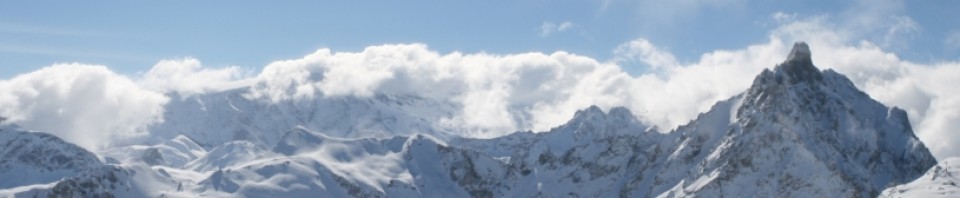
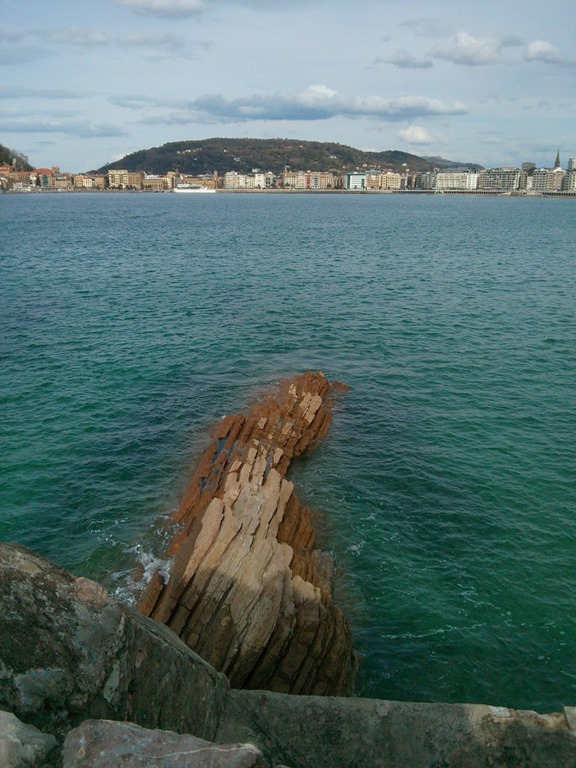
Finally, the source of the photo at the top of the page, I visited San Sebastian for an EU project I’m working on. I only had my phone so the pictures aren’t that good.

Happy New Year!

Review of the year: 2013

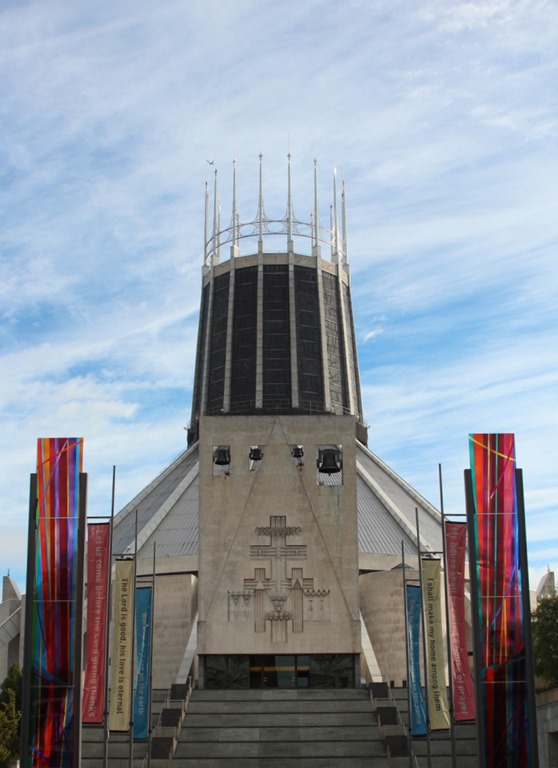
Liverpool Metropolitan CathedralMy blogging is much reduced this year, at least on my own blog. This is a result of my new job with ScraperWiki and child care, Thomas is now nearly two years old.

I started the year with a couple of posts on my shiny new laptop; working for a startup I’ve escaped from the corporate Dell. One post was on the beast itself – a Sony VAIO, and Windows 8 – Microsoft’s somewhat confusing new operating system offering. The other post was on running Ubuntu on the VAIO. In the past this was a case of setting up dual boot but various innovations make this difficult and there is, in my view, a better solution: a virtual machine.

There wasn’t much ranting this year: I only managed one little one about higher education, and the reluctance amongst lecturers to take any teaching qualifications. The only other marginally opinion piece was on electronic books, where I muttered about DRM limiting the functionality of ebooks.

I managed to read a few books which ended up on my own blog: The Eighth Day of Creation, about the unravelling of the genetic code was a dense, heroic read. The Dinosaur Hunters was light and fluffy. Empire of the Clouds and The Backroom Boys were largely wistful rememberings of Britain’s former greatness in jet aeroplanes and in technology more generally. Chasing Venus and a History of the World in 12 Maps returned to the themes of geodesy and mapping which I’ve explored in the past. Finally, a bit of London history with The Subterranean Railway and Lucy Inglis’ Georgian London. I’ve been following Lucy on twitter since Georgian London was a twinkle in her eye. It’s difficult to choose a favourite amongst these, it’s either History of the World in 12 Maps or Georgian London.

Over on ScraperWiki’s blog I’ve been knocking out blog posts at a great rate, you can see them all here. I did a good deal of book reviewing over there too, my commute into work on the train means I get an hour or so of reading every day – which quickly adds up to a lot of reading! I read about machine learning, data visualisation (this and this), Tableau (this and this), natural language processing, R, Javascript and software engineering. I’m currently ploughing my way through Data Mining: Practical Machine Learning Tools and Techniques. I think my favourite of these was Natural Language Processing with Python. I’m beginning to see the value of the more expensive, better established publishing houses in terms of book quality.

Alongside this I did a few blog posts on new tools for my trade. I’ve long programmed to do scientific analysis but ScraperWiki is a company which sells software, and the discipline of writing software for others to use is different from writing software for yourself, particularly important are testing and source control.

I spoke at a couple of events: Data Science London, and Strata London where I gave an Ignite talk. Ignite talks follow a special format, they are five minutes long and you get 20 slides which advance automatically at the rate of one every 15 seconds – a somewhat frantic experience. My talk is captured on video.

I also did some bits of data analysis; #InspiringWomen was a look at a response to the online bullying and abuse of women. A place in the country was about data on house prices which we had collected for a campaign by Shelter.

Back on my own blog I managed to do a couple of photographic posts, one on Liverpool. The rail loop under Liverpool was closed which meant I had to walk across town to work, and I suddenly realised that Liverpool is rather spectacular architecturally. This led me on to getting the Pevsner Guide to Liverpool. The ScraperWiki office might be a bit unusual in that a quarter of the company owns this book! I also went on a business trip to Trento, which turns out to be a very attractive city, unfortunately I only had my phone with me to take photos.

The last year has highlighted to me what a privilege it was to have so much time to spend on my blogging, photography and garden shed fiddling in the past. It’s what got me my new job but for many, equally able, people this investment of time simply isn’t possible with the other responsibilities they have. Something to consider the next time you’re recruiting, and so highly rating that extra-curricular activity.

Also I realise I have a great deal of theoretical knowledge about a whole pile of technologies but I have spent rather less time on actually doing anything with them, so maybe this coming year there’ll be less reading and more coding on the train.

Happy New Year to you all!

Review of the year: 2012

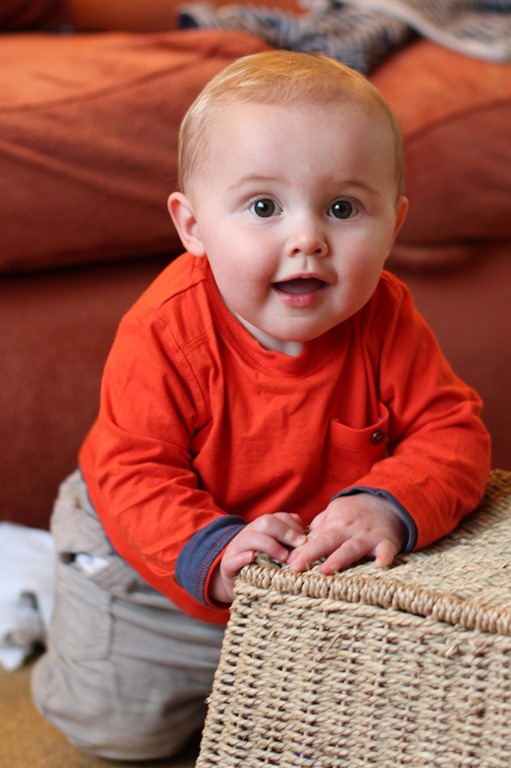
IMG_1236It has become a tradition for me to review my posts at the end of each year, OK I’ve done it twice before and now I find myself sounding like a teenage diarist.

Clearly the main event of this year has been The Arrival; Thomas was born on 4th February, as I write he is systematically throwing all his books on the floor whilst muttering to himself, it is 6am. I haven’t written much about Thomas but he fills my real life, looking after a small child is very much like conducting an experiment at a central facility.

I’ve managed to keep reading although at a somewhat reduced rate. I read about geodesy in “The Great Arc” and “Measure of the Earth”, both tales of considerable derring-do conducted in the jungles of India and Ecuador respectively. I read about scientific instruments, in Stargazers, “Decoding the Heavens”, "A computer called Leo" and "The History of Clocks & Watches". The subjects of the last two of these are obvious, the first is on telescopes and the second on the Antikythera mechanism, an astoundingly complex mechanical model of the heavens. I read about Alan Turing, Christiaan Huygens and Benjamin Franklin.

If I was forced to pick a favourite book I think I would go for Arthur Koestler’s "The Sleepwalkers" which traces the development of cosmology from the ancient Greeks to Isaac Newton with its focus on the journey from Copernicus, still obsessed with celestial circles, to Kepler who started to sound like a modern physicist. Keplers’ attempts to identify elliptic orbits takes on a pantomime air at some points… “They’re right in front of you!”. Or perhaps my favourite should be Stargazers since after reading this I bought a telescope – more of which below.

Slightly more miscellaneously I read Tim Harford’s "Adapt" about trial and error as an approach to public policy and management, "The Geek Manifesto" on science and politics and "The Etymologicon" – a casual journey through where words come from. Finally, I also read "Visualize This", capturing the essence of my data twiddling and cluing me into tidying up my plots using Inkscape (or Adobe Illustrator if you have the cash).

Another new thing this year was a telescope, rather than appear some sort of dedicated follower of fashion, rushing out to buy one in the wake of a celebrity astronomonothon, I delayed until May. This turned out to be a bad idea: it doesn’t get properly dark until two hours after sunset and starts to get light two hours before dawn difficult at the best of times, impossible when combined with childcare responsibilities. Consequently I got little star viewing action for quite some time, except for the Sun. My telescope review post (including video) was my most read post of the year. It has been magical though, my first view of Saturn with its rings had me hopping up and down like a small child! More recently I got Jupiter and the four moons discovered by Galileo. I’m still trying for a deep sky object, I don’t count my pictures of the whole Milky Way taken through a normal camera lens.

Not much else in the way of photography this year, obviously I have an enormous collection of photos of Thomas but I won’t bore you with them but I’ll say to expecting parents who are also keen photographers that a 50mm f/1.4 lens is ideal for photographing small children since you are often indoors operating in relatively low light. I also took some pictures of Chester Cathedral, Beeston Castle and in the area of Harlech, where we took our first holiday with Thomas.

I did a little bit of fiddling with data this year, plotting the spending of the Board of Longitude, finding that they did a great deal to support John Harrison through his life, and looking at how quarterly GDP growth figures are revised – basically they’re all over the place!

I also pottered around a little with science policy and politics. “I am Dr Faustus” was an oft-read post, in which I disagreed with Ananyo Bhattacharya’s assertion that basic research in the UK had been corrupted by the idea of showing some application. “GCSE results through the ages” also got a lot of hits, it showed the changes in grades for GCSE and A levels over the years. 

And as the year came to an end I handed in my notice to go to a new job – starting in March. I used some of my blog posts in support of my application!

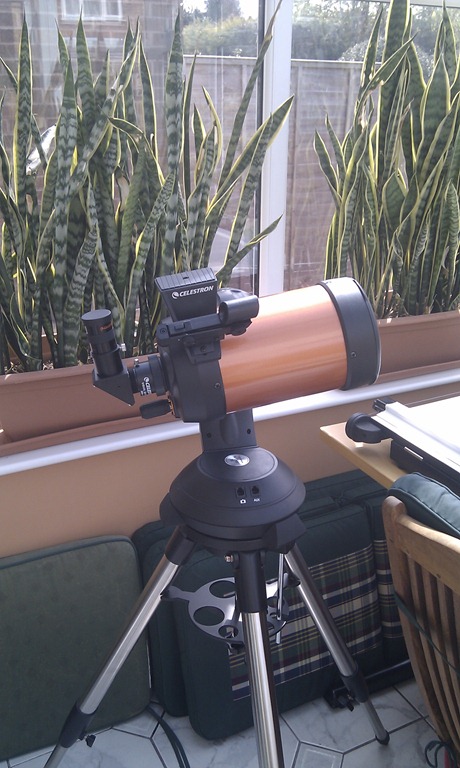
Celestron NexStar 5Se – a 125mm reflecting telescope

CelestronNexStar5SEThis is a brief overview of my shiny new purchase: a Celestron NexStar 5SE telescope. As an experiment I have also embedded a video review (here), I should also point out that so far cloud cover has meant the only celestial object I have observed is the sun (using the appropriate safety measures).

I bought my ‘scope from Sherwood’s, who I am happy to recommend for their good prices, and quick and efficient service. My purchase list was as follows:

  • Celestron NexStar 5SE (with mains adaptor)
  • SLA AstroPower station 12v 7Ah battery pack
  • Piggyback mount for my Canon 400D SLR
  • Universal camera adaptor and T-mount for similar
  • Moon filter
  • Baader solar filter film

The mount is powered, the add-on battery pack seemed like the best option for providing that power conveniently. I have a Canon 400D SLR camera which I wanted to use with the telescope, the piggyback mount lets me put the camera on top of the optical tube and simply use it to point the camera at the sky. The T-mount assembly allows me to use the telescope as a camera lens, albeit without auto-focus and aperture.

The solar filter is essential if you want to look at the sun, and I got the impression a moon filter was useful for dimming the brightness of the moon, photographers will know that when photographing the moon the exposure time is as if for a rock sitting in full sun, which is exactly what it is!

The 5SE is a Schmidt-Cassegrain telescope with a 125mm (5 inch) primary mirror, a focal length of 1250mm and an overall F/ratio of 10. “Schmidt-Cassegrain” means that the open end of the tube has a corrector plate (Schmidt’s contribution) and light is focussed by a large concave primary mirror and a smaller convex secondary mirror in the centre of the corrector plate. The image is viewed through an eyepiece in the back of the optical tube, behind the primary mirror. In practical terms it also means the telescope has a very short tube length making it more portable than similarly specified telescopes. The whole assembly is easy to pick up and carry in its deployed state, and the optical tube in particular was well-packed on delivery forming the basis of a useful carrycase.

The telescope is supplied with a 25mm focal length eyepiece which gives a magnification of x50, the maximum useful magnification of the telescope should be x300 with appropriate eyepiece. Focus is achieved by turning a knob on the back plane of the telescope tube, which moves the primary mirror. The eyepiece is attached to a periscope (Star Diagonal in Celestron’s parlance) to give a more comfortable viewing position. The finderscope is a Celestron Star Pointer, which is a non-magnifying window with an LED spot projected to the middle for guiding, it took me a little while to get the hang of this but I can see the benefit of a low magnification finderscope.

The telescope is on a computerized alt-azimuth mount which also includes an equatorial wedge (like the equatorial platform), meaning that the rotational motion of the mount can be made co-axial with that of the earth – allowing un-rotated tracking of objects through the sky for astrophotographic purposes. The controller is a handset device on a cord, in night time operation the telescope can be aligned to the night sky by pointing it to three different stars, after which it will goto any one of a huge catalogue of celestial objects selected using the handset.

The optical tube feels nice and chunky, although the finderscope is a bit plasticky. The piggyback mount attaches using the same mounting holes as the finderscope, the finderscope then bolts back on top, I did a bit of tweaky of the screws along with adjustments on the finderscope to get it aligned. I have achieved fine views of my neighbours chimney pot!

There is a battery compartment in the mount which takes 8xAA batteries, reading on the internet I understand the lifetime for this set is about 30 minutes in operation, which is why I got both a mains adaptor and a 3rd party battery pack. I suspect I’ll mainly use the add-on battery pack for the convenience of fewer trailing leads. The mount doesn’t operate without power, which is a bit of a drawback, the telescope can be tilted but not rotated. The mount sits on top of a nice chunky tripod, to which it is attached by three screws, so in principle you could make yourself a “manualised” version by sitting the scope on a turntable. I have the slightly spurious desire to see a graduated scale on the mount movements. I’m used to using research grade optical equipment and whilst the optics have that feel about them the mount, although functional, does not.

The telescope comes with TheSkyX (First Light edition) planetarium software, and also an application called “NexRemote” which seems to allow you to control the telescope using a virtual version of the handset on screen – this seems a bit pointless to me! Other telescope control software is available, and it appears there is an interface standard. The programmer in me is hankering to write my own controller software!

Overall I’m pleased with my new purchase but desperate for a slightly less cloudy night to try it out properly – no doubt more blog posts to follow once I’ve done this! Even at £650 for the telescope it is cheaper than many lenses for my Canon SLR, although it is a little chastening that John Hadley’s 1721 reflecting telescope had a larger primary mirror.

Update:

After a few weeks of twilight use I thought it might be useful to add a couple of further comments which don’t really make a full new blog post:

1. You can get and set the telescope azimuth and altitude directly using the appropriate entries in the Utilities menu, without alignment these values are based on an assumed initial position of 0,0. During the hours of daylight, when only a very limited number of celestial bodies may be visible, you can carry out a “single body” alignment using the “Solar System Align” option in Alignment. This allows you to enable tracking, and to Goto specified absolute coordinates – useful if you want to survey heights of neighbouring obstructions.

2. The 5SE does not support autoguiding whilst the 6SE and 8SE do. The NexStar range does seem a bit confusing in terms of the facilities available across the range, the 5SE for another example is the only one to have a built-in equatorial wedge.

Here is a video tour, which covers much of what I’ve written above but includes the sound of me tripping over the cat’s water bowl: