Tag: review

Review of the year: 2011

Scan1At this time it is traditional to review the year just past, I struggle to be timely in my blogging but this is a target big enough to hit (preceded by some holiday, so I have time to do it). As always my efforts are partly for my own amusement but I’m also a desperate observer of my site traffic stats. If you ever feel the need to make someone happy, for very little effort, just randomly click onto a few pages!

I heroically continue on my chosen path as a Liberal Democrat. I made a few posts about the AV referendum, maybe the less said about that the better. I read “The Orange Book”, I found this more entertaining than I thought I would – it’s nice to see policy discussion beyond the length of a newspaper article. The rest of the year I satisfied myself with the odd, not particularly party political, rant. I also made a few posts on the House of Lords, both statistical and political. In this area the thing that affected me most was Terry Pratchett’s programme on assisted dying, which I wrote about here. That, and going on strike (here). The most read of my sort-of-political posts was on the New College of the Humanities, offering degrees for £18,000 per year, which seemed to induce a great rage in academics.

I still find the economy interesting: firstly, I wrote on looking at debt-deficit figures to find economies similar to that of the UK (here) – our neighbours in the phase diagram look distinctly unwell. Secondly, on deficit reduction by growth (here) – it 0.5% on growth per year is worth about £7bn, or a couple of pence on basic rate tax. I also read Niall Ferguson’s “The Ascent of Money” which gives a handy background for our current economic difficulties and also highlights the benefits of a well-functioning economic system.

This year the focus of my reading has been on the history of science, particularly in the late 18th century. This has included books on the Lunar Society, Erasmus Darwin and Edmond Halley. My favourite books of the year were Jean-Pierre Poirier’s biography of Antoine Lavoisier (Lavoisier: Chemist, Biologist, Economist) and Ken Alder’s book: “The Measure of All Things” on the measurement of the meridian from Dunkerque to Barcelona to define the length of the metre at the at the time of the French Revolution. For me science is a route into a more general appreciation of history.

A review of “The Immortal Life of Henrietta Lacks” by Rebecca Skloot is my most read post of the year, it’s about the woman whose cells were used to create the first immortal human cell-line. It’s a fine book, quite unlike any other science related book I have ever read – I suspect the popularity of the post is because it is timely (the book was published a year ago) and I can’t help thinking an awful lot of students have been sent to read it and are looking for a summary. The same goes for “In Defence of History” by R.J. Evans, which is a defence of the study of history against the post-modernists.

I had some fun writing about the French Académie des Sciences and lead mining in the Yorkshire Dales, without the support of a book to review.

A spin-off from my reading about maps, in particular Ken Alder’s book, was a rather obsessional quest to put the locations of all the triangulation points into a Google Map (here). Another enjoyable bit of programmatic fiddling was in playing with the catalogue of objects for the National Museum of Science and Industry (NMSI) which I called “Inordinately fond of bottles…” because it turns out the NMSI is home to a huge number of bottles of all descriptions. And there was also the Javascript timeline of British Wars, it’s always good to know when your scientist protagonists are being distracted by a war.

I still do some photography, on holidays in Hinterglemm, the Yorkshire Dales and the deep South Coast, which is where I grew up; on our expedition down the Sandstone Trail and on a photo tour of Chester, utilising some software for straightening photos of buildings taken with a very wide-angle lens. I also wrote about the Lytro re-focusable camera which takes an array of images meaning the focal plane of an image can be shifted in post-processing (here).

In July I moved my blog from Blogger to self-hosted WordPress. This was driven in part by Mrs SomeBeans for whom I made a website (Blue Poppy Garden Design) – on seeing what I had wrought I wanted one for myself! I made some notes on the process (here). Mrs SomeBeans is still ahead though – she has rather natty business cards.

Leaving the best to last; the most significant thing to happen for me this year is that Mrs SomeBeans is pregnant! The new arrival (codename Beetle) is due on 22nd February. It’s been an odd sort of time, we have prepared for the new arrival by getting a media server, replacing the patio, decorating and attending NCT classes. I haven’t written very much about it, perhaps for fear of a jinx and perhaps because it is very personal. I did do a bit of blogging, the dating scan (here) and the anatomy scan (here), I also got interested in ultrasound scanning (here).

I regret not writing more on current affairs, the earthquake in Japan and the various elements of the Arab Spring have been completely absent from my blog. I have a suspicion my blogging for the coming year will be replaced by nappy changing and other childcare activities.

Happy New Year!

Book review: Doomsday Men by P.D. Smith

DoomsdayMenMy next book review is on Doomsday Men: The Real Dr Strangelove and the Dream of the Superweapon by P.D. Smith. I arrived at this book via the comments on my earlier post about the Manhattan Project, the Allied project to develop the atomic bombs dropped on Hiroshima and Nagasaki at the end of the Second World War. I also wrote about science fiction, which is relevant to this book too.

Doomsday Men brings context to the Manhattan Project, it shows the early imagining of what radioactivity could bring in terms of weapons of war, it shows science fiction writers foreseeing the applications, politicians considering the practical use of weapons of mass destruction and scientists working towards them. Alongside atomic weapons the potential for war from the air had been well considered before it was implemented.

The book starts with the conception of a genuine doomsday superweapon, that’s to say one that would wipe out all life on earth. This had been a theme of science fiction in the past, but in the early 1950’s it became plausible. Essentially the trick is to set off a fusion explosion in the presence of a large quantity of a particular element, cobalt, which would pick up neutrons becoming intensely radioactive whilst being vapourised and cast up into the atmosphere to settle the world over providing a lethal dose of radiation. The amount of cobalt required is about 10,000 tonnes which is only a cube with sides 10 metres long. There’s an open question as to whether the dust would be distributed uniformly enough to wipe out all life.

Leo Szilard is a central character through the book, along with fellow Hungarians John Von Neumann, Eugene Wigner and Edward Teller, known collectively as the Hungarian Quartet. They arrived in the US, fleeing anti-Semitism in Europe and were to play an important part in the development of nuclear weapons. It’s very striking the number of European Jews who migrated to the US in the period after the First World War, including Albert Einstein and Enrico Fermi. In the first instance many of them were keen to help in the development of nuclear weapons as a response to Hitler’s rise in Germany: a state they believed had both the technical ability to make such weapons and, with Hitler, the will to use them in war. Towards the end of the Second World War many of them felt less enthusiastic about their use against the Japanese, despite Japan’s hideous development and use of biological weapons against the Chinese in the 1930’s. Following the war, Von Neumann and particularly Teller continued to be involved in further developments now driven by anti-Communism sentiments.

The route to the doomsday weapon started with the discovery of radioactivity towards the end of the 19th century, and in particular the discovery of radium by Pierre and Marie Curie at the turn of the century. Around 1902 Frederick Soddy and Sir William Crookes both highlighted the huge amounts of energy was bound up in matter. Crookes saying: “one gram could raise the entire fleet of the British Navy several thousand fleet in the sky”. By 1913 H.G. Wells had very explicitly written about a nuclear weapon in “A World Set Free”. The use of chemical weapons, tanks and aeroplanes in war had all been imagined well before they were used too. Clearly there are big technical issues to address in going from a science fiction idea to a real system in battle, but the point here is that these ideas had serious public currency well before they were realised: there could be no “we’ll keep this quiet and no-one will think of it”. In a sense the key theme of the book is the interweaving of fiction with fact through the first half of the 20th century.

It was during the First World War that “scientific” superweapons started to be used, and the importance of science in waging war started to be recognised explicitly. Fritz Haber, a chemist, Nobel prize-winner for his commercial synthesis of ammonia, contemporary of Einstein, was instrumental in bringing chemical weapons to war, he was a German nationalist and felt the development of such weapons a duty to his country. He seemed quite enthusiastic about his work, writing:

“Chlorine: easy to liquefy, disastrous to the human organism, very cheap, mind you! Phosgene: ten times as strong as chlorine. Mustard gas: the best fighting gas of all”.

Once the Germans had used chemical weapons the British and French quickly developed their own. Research and manufacture of chemical weapons was to involve up to 75,000 people by the end of the war – this is about half the number involved in the Manhattan Project. A minority of scientists considered chemical warfare as a blessing compared to the conventional equivalent, for many others it was utterly abhorrent. The military had mixed feelings. Chemical weapons were banned by a variety of treaties, practically they seemed something of a double-edged sword with the first British use of chlorine at Loos causing 2000 casualties on their own side which perhaps explains why they’ve been so rarely used since. With the rise of Nazism Haber, a Jew, was to flee Germany and die shortly thereafter.

The First World War also saw the foundation of the British Board of Invention and Research in 1916, tasked with finding science to fight wars – it sought ideas from the public, one of the which was to train cormorants to peck out the mortar between bricks!

Biological weapons were to be developed by the Japanese whilst at war in China during the 1930’s and the Second World War, in an effort led by Shiro Ishii. During this period thousands were to die through his work, many in a range of human experiments to match those carried out by the Nazi doctors. Following the Second World War Ishii was given immunity from prosecution in order that the US could obtain information on biological weapons from him.

So chemistry and biology produced rather unpleasant weapons but they could not be described as decisive: for that you need physicists.

Szilard was first to realise (in 1933) that an atomic bomb might be made via a chain reaction: the fission of an atomic nucleus producing two or more neutrons which would drive further fission. He made some effort to keep the idea secret, at least from the Germans, via a patent held by the British Admirality. This was a very unusual move for a scientist in an area of pure science. In 1939 he was to visit Roosevelt with Einstein to warn him of the potential for an atomic bomb and the possibility that the Germans would make one. Ultimately this contact led to the Manhattan Project and the bombs dropped on Hiroshima and Nagasaki: killing at least 200,000 people.

One of the recurring themes in fiction was the idea of a scientist discovering the doomsday weapon and then holding the world to ransom for peace with the new “system of the world”: a world government led by scientists and technocrats. This sort of idea is better described as left-wing rather than right-wing. And I can say, as a scientist, that it has a certain appeal! Perhaps this explains something of why scientists are more often perceived as left-wing rather than right-wing.

Doomsday Men ends with the story of Stanley Kubrick’s 1964 film “Dr Strangelove: or How I stopped worrying and learned to love the Bomb”. The title character appears to have been based on a combination of Teller, von Neumann and perhaps Werner von Braun – the German rocket scientist captured by the Americans who went on to found the US space programme.

Overall a rather good read: providing good context to the Manhattan Project and the Cold War, and the importance of science fiction in seeing into the future.

Footnote: one of the drawbacks of reading on a Kindle: I reached the end rather unexpectedly since the footnotes, bibliography, and index take up a third of the book!

Book Review: For all the tea in China by Sarah Rose

ForAllTeaChinaBookI’ve been on a bit of a reading spree: next up is “For all the tea in China” by Sarah Rose. This is the story of Robert Fortune and his trips to China in the mid-nineteenth century to obtain tea plants and the secret of tea manufacture for the East India Company to use in India.

Robert Fortune (1812-1880) was a botanist with a modest background. Starting his working life at the Royal Botanic Garden Edinburgh, he later became Curator of the Chelsea Physic Garden. These were relatively poorly paid posts, however there were few such positions to support a professional botanist without their own means of support. He made several substantial visits to the Far East, funded by the Horticultural Society of London and the British East India Company. He died a wealthy man in large part through the wide range of plant introductions he had made, as well as through sales of artefacts he had acquired in the Far East. The list of introductions is well worth a skim through for the modern gardener:

The East India Company had been given a monopoly of trade to the Far East in 1600, through this monopoly they had built a lucrative trade in silk and tea from China, as well as effectively running India. The trades from China were matched with trades into China of opium from India, by the middle of the 19th century addiction to opium was a significant problem in China. The volume of trade it brought made the East India Company a very significant contributor to British government income (of order 10%). Although there are now many global corporations, the East India Company was one of the first and in many ways most powerful. The company was ultimately to lose its dominance following the Indian Mutiny in 1858, and was finally wound up in 1874. The mutiny was likely the cumulation of a long process since the monopoly that the East India Company enjoyed was not popular with free-marketeers who were starting to come to the fore.

At the time of Fortune’s first trip to China in 1845 the English had long been drinking tea imported from China, in exchange for opium grown in India. The English drank both green and black teas, although unlike the Chinese they added milk and sugar (obtained from another British colonial outpost). The Chinese were keen to keep the secret of both the tea plant, and its manufacture into tea leaves for making tea. Whilst the British, in particular the East India Company were keen to get these secrets believing (correctly) that tea would grow well in Himalayan India and would make a good profit. Some tea was already being grown in the Assam district of India but is was derived from inferior Chinese plants. The tea plant is Camellia sinensis a close relative of the decorative camellias of which Fortune also introduced some species.

Before Fortune’s first visit to China it had not even been established that black tea and green tea came from the same plant, but were processed differently. His trips required considerable subterfuge: Westerners had only recently been allowed into anywhere other than a limited number of ports in China, as a result of the first Opium War and Fortune’s activities went considerably beyond what was allowed even under these revised regulations. One of Fortune’s discoveries was that green tea had been coloured by the Chinese for the export market using Prussian Blue (which is toxic) and gypsum. Following a couple of false starts he was eventually able to transport a large number of highest quality tea plant seedlings to Darjeeling in India, as well as providing skilled tea makers and extensive notes on the tea making process.

The key to Fortune’s success in shipping out tea plants from China were Wardian cases, these are essentially sealed glass environments containing soil and some water. Plants, or more importantly, troublesome seeds could be sealed into these containers and as long as they remained sealed, and given some light there would be a good chance of their biological cargo surviving a lengthy sea journey through a range of climates. Prior to this discovery long distance transplantations were tricky. Nowadays we see Kew Gardens as largely a place of leisure, but in the 19th century it was very much at the heart of the Empire in terms of facilitating the movement of plants around the world for commercial reasons. This type of activity was also an early interest of the Royal Society.

It’s difficult not to draw parallels between the state sanctioned opium trade which the United Kingdom used to support, and its current attitude to drug smuggling. Nor between the industrial espionage of the East India Company in the 19th century, and the current issues with the Chinese approach to intellectual property.

I found the sections of the book reporting Fortune’s travels a bit unfulfilling: they seemed to be a sequence of travel anecdotes involving the mischief caused by his Chinese servants – this style does affect other parts of the books. However, more generally the book made me curious to know more about the East India Company, the Opium Wars and so forth and I felt I’d learnt something about the introduction of tea to India.

I’m tempted by Fortune’s book: Three years’ wanderings in the Northern Provinces of China 

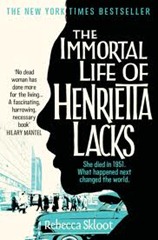
Book review: The Immortal Life of Henrietta Lacks by Rebecca Skloot

HenriettaLacksThe Immortal Life of Henrietta Lacks by Rebecca Skloot is an unusual book. It is part cell biology: the story of cell-lines kept alive perpetually in the laboratory; it is part story of Henrietta Lacks and her family from whom the first of these cell-lines (called HeLa) was derived; it is the story of how medical ethics has evolved over the last 60 years and it is part story of the story.

Henrietta Lacks’ cells were taken at the Johns Hopkins Hospital in Baltimore in 1951 and cultured by George Gey during her treatment for an aggressive cervical cancer from which she subsequently died at the age of thirty-one, later that year. Gey, with the help of Lacks’ cells, was the first person to successfully maintain a cell-line. The cells cultured are cancer cells rather than normal cells. Following his work a wide range of other cell-lines were cultured from a variety of organs and species, however it subsequently turned out that many of these were actually the HeLa cell-line which turned out to be particularly pernicious. Researchers would start with a culture of different cells, but they would die to be replaced by HeLa cell “contaminants”.

Once Gey had started the cell-line he gave them away freely to other researchers, however it was not very long before the HeLa cells were being sold commercially. An early application of the HeLa cell-line was in testing the newly developed Salk vaccine for polio, the first of many, many applications. More dubiously Chester Southam injected the cancerous cells into prisoners, and subsequently into many patients. This was with the view to seeing if they developed within the body, the problem was that the patients were not informed that the cells were cancerous. This practice ended when three young Jewish doctors aware of the Nuremburg Code, proposed as a result of post-war trials of Nazi doctors responsible for horrific human experimentation, refused to take part in the experiments.

To my mind the unique part of the book is the in depth coverage of Henrietta Lacks’ family through to the present day. Rebecca Skloot tells in detail the long persistent trail to talk to them, an African-American family who certainly have good reason to be suspicious of white people asking about Henrietta. The Lacks’ were never a model family but then there is no reason for them so to be. Race and medicine have a poor history in the US. The Tuskagee Syphilis experiments perhaps being the lowest point, in which African-Americans were denied effective treatment for the disease so the full course of its symptoms could be observed. Other racism is less direct, as relatively poor Americans the Lacks family have reduced access to the treatments arising from the cells of their ancestor. If she were a white child, Elsie Lacks, Henrietta’s mentally disabled daughter would not have died at the Crownsville State Hospital, certainly not in such terrible circumstances.

In 2011 the cell lines derived from Henrietta Lacks would not have been called HeLa. Possibly her cells would not have been collected at all, requiring full informed consent. Her name would have become known to all including the family. The family would not have learned of the gruesome details of her death at the “hands” of an aggressive cervical cancer via a book whose author had been given Henrietta Lacks medical records.

To my mind the real shortcomings of the scientists were not in what they did in the first instance but how they failed to support the Lacks’ not with money but with information. Until Skloot and Christoph Lengauer showed them and spoke to them, no-one had explained exactly what cells had been taken, what had been done with them, the significance of Henrietta Lacks to science or the specific knowledge of her condition did or did not have to their health in terms which they could understand; giving them a book on cell biology was not enough.

Skloot relates three stories of discoveries arising from a specific persons’ cells: the Lacks story and those of Ted Slavin and John Moore. Slavin was born a haemophiliac and as a result of the blood transfusions that he had to receive as a result of his condition he contracted Hepatitis B, however he did not succumb to this disease, he was immune. His doctor told him that this made him special, and that his blood was valuable and he subsequently profited from this knowledge by selling samples of his blood. John Moore, on the other hand, had hairy-cell leukemia and only discovered his blood was valuable after his doctor had patented his cell-line, he was subsequently involved in lengthy legal action to regain some control of his cells.

As a scientist whose work once touched, peripherally on human tissue culture and who recently had surgery from which such tissue was taken this is a somewhat uncomfortable story. In the project I worked on a postdoc was tasked with organising consent forms for, I think, blood vessels removed during a procedure i.e. they were a by-product. In this instance the specifics of the cells were not important – they were destined for frequently unsuccessful experiments. From our point of view the best possible outcome would been that the materials we had synthesised proved to be a congenial home for blood vessel wall cells. In this case nothing of monetary value is derived directly from the donors cells.

For my own part: I have no problem with researchers using my medical offcuts, I do feel unhappy with the idea that my specific cells might be valuable and that I might not get a proportion of that value.

Book review: Mutants by Armand Marie Leroi

Mutants Armand Marie LeroiChristmas is a time for reading, so in addition to Rolt’s Brunel biography I have also read “Mutants: On the form, varieties & errors of the human body” by Armand Marie Leroi.

This is a story of developmental biology told through the medium of mutants, people for whom development doesn’t go quite to standard plan.

The book runs through a sequence of distinct mutations: Siamese twinning, deformities to arms and legs, skeletal defects, dwarfs and giants, various sexual variations, albinism and hairiness, and finally ageing. His approach does not revel in the freak show aspects of human mutants rather makes a brief reference to the historical recognition of such mutations and uses this as a jumping off point for discussion of modern biological understanding.

Mutations have long been an area for scientific study because it was realised that studying malfunction would provide clues to the mechanisms of normal development.

The marvel of developmental biology is that it is a method of construction completely at odds to the human way of making complex devices. Rather than a complex entity assembling pieces to a plan, biology starts with an instruction set which builds order out of chaos with no external help. It is self-organisation, creation from (nearly) nothing with no supporting infrastructure. There are non-biological self-organising systems and we make use of some of them industrially, but there is nothing that matches the complexity, the heterogeneity that biology can achieve.

The fundamentals of development biology are genes coding for proteins that tell you where you are in the developing embryo and trigger growth or differentiation on that basis i.e. “I find myself in the presence of proteins A, B, and C at these particular concentrations, therefore I must make a leg”. As an example, the proteins noggin and bone morphogenetic protein 4 (BMP4) define the top and bottom of the growing embryo – in simple terms noggin stimulates the growth of the brain. Whimsical naming of a protein may seem like a good idea in the lab but I imagine it makes discussions with parents about the problems of their perhaps-dead child difficult.

An intriguing point is the frequent robustness of developmental mechanisms, often as not molecular biologists have identified a “critical” protein, created a “knock-out” mouse lacking that protein and discovered that the mouse developed relatively well – other developmental systems having compensated for the loss.

The diverse effects of mutations can be surprising, for example there is a condition called Kartagener’s Syndrome whereby the internal organs of the body are flipped left-right – the heart, rather than lying slightly on the left of the body lies on the right and so forth. People with this syndrome have respiratory problems, a diminished sense of smell and sterility. The cause of these apparently disparate problems is a faulty cilia motor, cilia are small hairs on the surface of a cell that move. In the lungs and nose they whip about to move mucus around, in men the cilia motor drives the tail of sperm, and in the developing embryo the whipping of cilia break the left-right symmetry. Hence failure of the cilia motor proteins leads to a diverse set of impacts.

In addition to proteins which induce specific behaviours, there are proteins which have a more overarching impacts, such as those produced in the pituitary gland, malfunctions of which can lead to dwarfism or gigantism.

As usual my butterfly mind has fixed on some less relevant portions of the book. Plato giving voice to Aristophanes in The Symposium posited that sexual desire can be explained because man and woman were once combined: in fact three pairings existed man-man, man-woman and woman-woman. These creatures were physically joined, having four arms and legs, two heads and two “privy members”. However, they were troublesome (cartwheeling on their eight limbs is explicitly mentioned) – so Zeus separated them into the men and women. And now everyone seeks to find their original partner thus explaining homo- and hetero-sexuality. There’s some suggestion that Plato was making a little fun of Greek myth here!

Thanks to this book I have learned that the male scrotum is the homologous structure to the female labia, the two halves have fused to form a handy sack. The development of sexual organs finds the male really as something that has failed to become female.

Leroi finishes with signposts to a couple of open areas in developmental biology, one is race: people have a moderate ability to identify racial groups and tie them to countries but current genetics cannot match this ability often finding much bigger variations within populations. As Leroi highlights, this is a fraught area in social terms but it is interesting that differences obvious to people are not obvious to genetics. Secondly he mentions beauty: does beauty tell us something about genetic fitness?

This book highlights the huge gap between knowing the base pair sequence of DNA and understanding how the organisms arise from that sequence. At times the language gets technical a little too quickly and it could really have done with some explanatory diagrams.